
Best Time to Visit Meghalaya: A Month by Month Guide
The best time to visit Meghalaya is October to April. Month-by-month rain, temperatures, festivals and which months suit Dawki, Sohra and the root bridges.
Shillong Trip Travel Desk · Updated · 9 min read
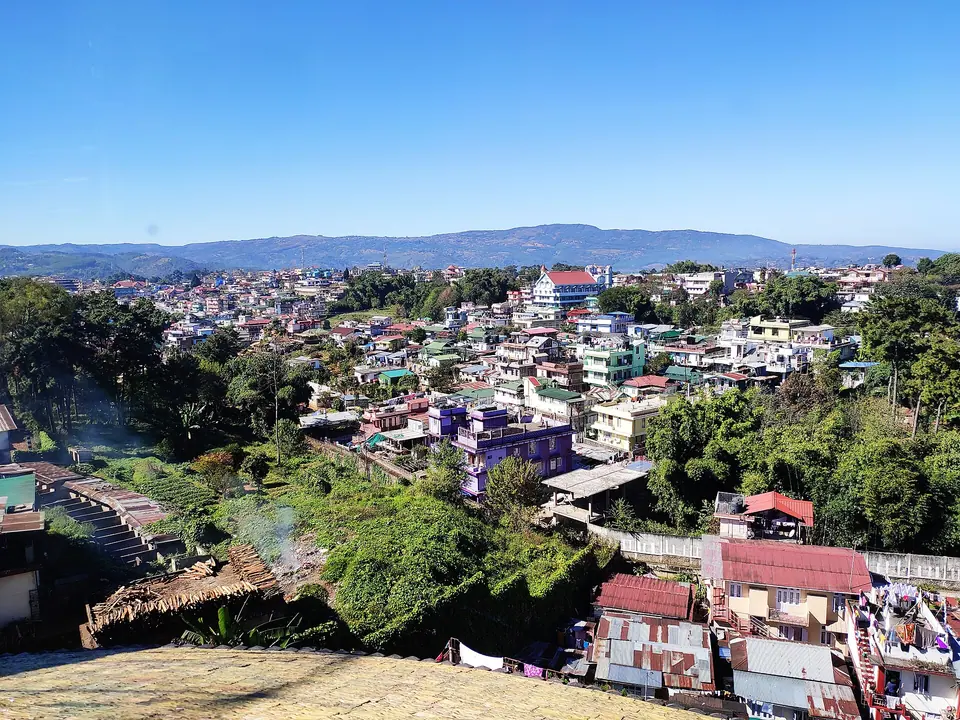 ANKAN · Commons · CC BY-SA 4.0
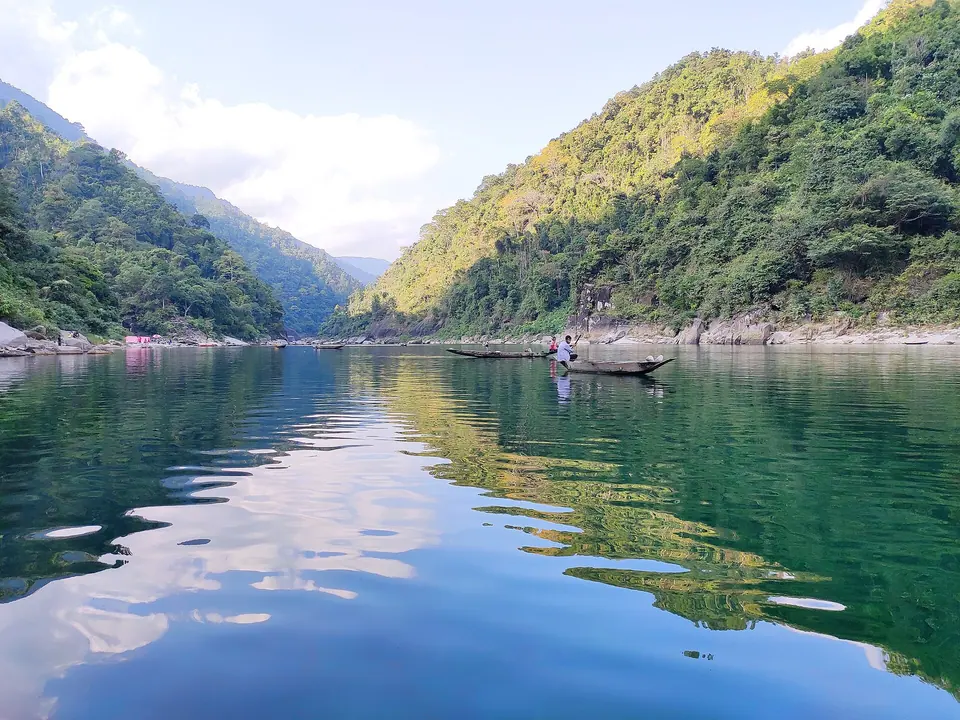
The best time to visit Meghalaya is October to April, when roads are dry, Dawki's Umngot River runs clear and the root bridge treks are safe. October and November give green hills with little rain. December to February is cold and clear. June to September brings heavy monsoon rain, full waterfalls and fewer crowds.
Key takeaways
- October to April is the dry, reliable window; October and November are our favourite months overall
- Sohra averages about 2,600 mm of rain in each of June and July, so monsoon trips need flexible days
- Dawki's glass-clear water shows best from November to April; boating can stop when the Umngot runs high
- Shillong's January nights average about 6°C, cold enough for a heavy jacket but rarely below freezing
- Festival months are April (Shad Suk Mynsiem), July (Behdienkhlam) and November (Nongkrem and Wangala)
- The monsoon suits waterfall lovers and budget travellers who accept fog, leeches and slower roads
On this page 13 sections
- The short answer by season
- Month-by-month rain and temperatures
- October and November: our first choice
- December to February: cold, clear and busy at Christmas
- March to May: warm days and afternoon storms
- June to September: the monsoon months
- Festival calendar at a glance
- Best month for each place
- Daylight, fog and driving hours
- Why Shillong and Sohra feel like different climates
- Crowds, prices and booking windows
- What to wear in each season
- How we'd plan it
- FAQs
Meghalaya's weather splits the year in two: about seven dry months when you can plan every hour, and five wet months when the rain plans for you. Pick the wrong half for the trip you want and you will spend Dawki in the mud or Sohra inside a cloud.
We run trips in every month, including July, and our guests' best days come from matching the month to the place. Below is what each month is really like, with rainfall and temperatures from long-term averages for Shillong and Sohra (Cherrapunji), and the places that work best in each.
The short answer by season
| Season | Months | Shillong day / night | What it is good for |
|---|---|---|---|
| Post-monsoon | October to November | 19 to 22°C / 10 to 14°C | Green hills, full waterfalls, clearing rivers, all sightseeing |
| Winter | December to February | 15 to 18°C / 6 to 8°C | Clear skies, Dawki boating, root bridge treks, Christmas in Shillong |
| Spring | March to May | 21 to 24°C / 11 to 16°C | Warm days, afternoon storms, festivals, fewer crowds in March |
| Monsoon | June to September | about 24°C / 17 to 18°C | Waterfalls at full power, fog, low prices, loose plans |
If you want one sentence: October to April is the best time to visit Meghalaya, with October and November our first choice, and the monsoon a deliberate choice for waterfall lovers.
Month-by-month rain and temperatures
Numbers help more than adjectives here. Shillong sits at about 1,525 m and gets roughly 2,100 mm of rain a year. Sohra, 54 km south on the edge of the plateau, gets more than 11,000 mm, one of the highest totals on earth. The same week can feel very different in the two places.
| Month | Shillong high / low (°C) | Shillong rain (mm) | Sohra rain (mm) | Our verdict |
|---|---|---|---|---|
| January | 15 / 6 | 13 | 16 | Cold, dry, clear |
| February | 18 / 8 | 15 | 54 | Dry, pleasant |
| March | 21 / 11 | 43 | 364 | Warm, first storms |
| April | 23 / 14 | 131 | 792 | Afternoon storms |
| May | 24 / 16 | 245 | 1,297 | Wet afternoons |
| June | 24 / 17 | 424 | 2,608 | Full monsoon |
| July | 24 / 18 | 402 | 2,665 | Wettest month |
| August | 24 / 18 | 328 | 1,769 | Heavy rain, greenest |
| September | 24 / 17 | 270 | 1,090 | Rain easing |
| October | 22 / 14 | 197 | 461 | Clearing, green |
| November | 19 / 10 | 25 | 49 | Near-perfect |
| December | 16 / 7 | 7 | 10 | Cold, dry, clear |
Averages are 30-year means and individual years vary. A dry November can still bring one rainy day, and a wet October can run late.
October and November: our first choice
October starts wet and ends dry. In the first week you may still get the tail of the monsoon; by the last week the sky is usually blue until 3 pm. November is the steadiest month of the year, with about 25 mm of rain in Shillong, cool nights and long visibility from Laitlum and the Sohra viewpoints.
Why we like it:
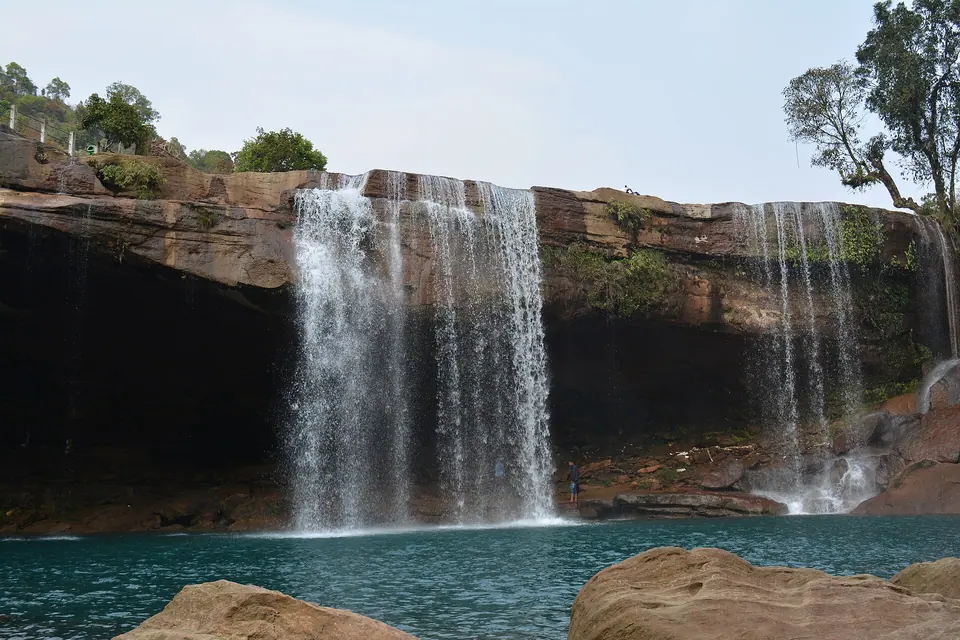
- Waterfalls such as Nohkalikai and Seven Sisters still carry water from the monsoon
- The Umngot at Dawki starts to clear from November
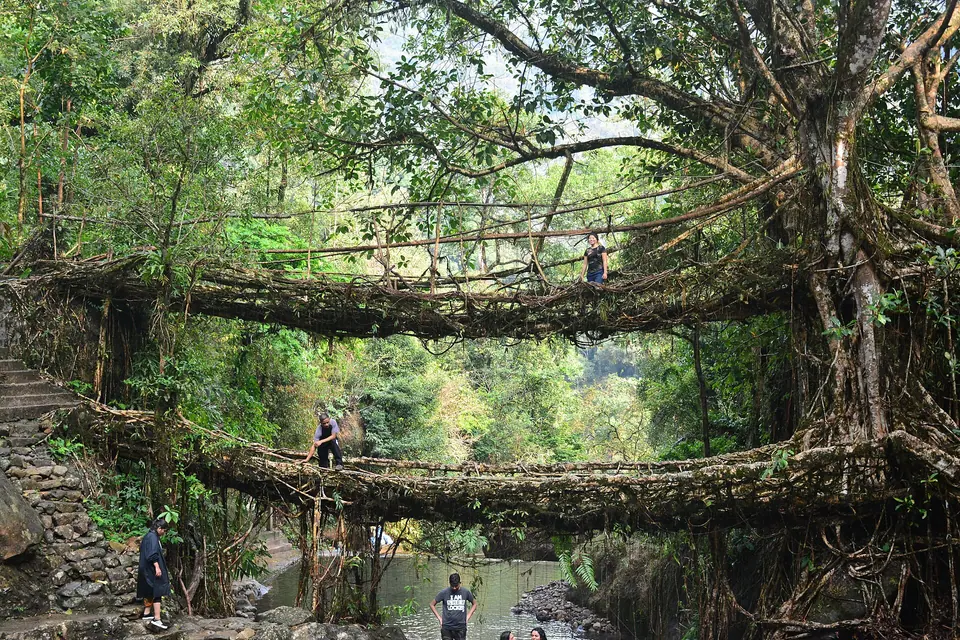
- The root bridge trek dries out and the natural pools below Nongriat are warm enough to swim
- The Nongkrem dance at Smit, near Shillong, and the Wangala festival in the Garo Hills usually fall in this window
The catch is Durga Puja. The Puja holidays bring the biggest crowds of the year, especially from Kolkata. Hotels in Shillong and Sohra fill six to eight weeks ahead. Our October guide has the week-by-week detail.
December to February: cold, clear and busy at Christmas
Winter is dry. Shillong averages a high of about 15°C and a low of about 6°C in January, and many guesthouses have no central heating, so evenings feel colder than the number suggests. Skies are clear after the morning fog lifts, which makes this the best period for canyon views and long drives.
- Dawki is at its clearest from January to March, when boats seem to float in mid-air. See our Dawki and Umngot River guide for boat timings.
- Christmas in Shillong is a genuine event: churches lit up, carol singing, crowded Police Bazar. Book early.
- Waterfalls shrink. Nohkalikai drops to a thin ribbon by February.
Winter is the best time for our four-night Shillong, Cherrapunji, Dawki and Mawlynnong trip, from INR 16,500 per person, because every stop on that route is at its most reliable.
March to May: warm days and afternoon storms
Spring warms up fast. By April, Shillong highs reach 23°C and Sohra averages close to 800 mm of rain, most of it in short, violent afternoon storms rather than all-day rain. Mornings are usually clear.
This is a good season for travellers who can start early. Plan sightseeing from 7 am to 1 pm and keep afternoons for cafes and short drives. March is quieter than the winter peak; May is hot in Guwahati and pleasant in the hills, which makes it popular with families during school holidays.
April is also festival month. The Shad Suk Mynsiem, a Khasi thanksgiving dance, is performed at the Weiking Ground in Shillong over three days, usually in April. Check the date with the local organisers each year.
June to September: the monsoon months
This is the season that made Sohra and Mawsynram famous. July averages about 2,665 mm of rain in Sohra, and some days bring more than 200 mm. The hills turn a deep green, dozens of seasonal waterfalls appear along the Sohra road, and clouds pour through the valleys.
What changes in the monsoon:
- Views vanish for hours. Nohkalikai and Laitlum can be fully hidden by cloud, then clear for ten minutes.
- Roads slow down. Landslides close stretches for a few hours after very heavy rain.
- Dawki boating often stops when the river runs high and muddy.
- Trekking gets harder. The steps to Nongriat are slippery and leeches are common.
- Prices drop and hotels are easy to book outside long weekends.
The monsoon is a real choice, not a mistake, if you want rain and waterfalls. Our four-night Monsoon Meghalaya trip, from INR 15,000 per person, is built around it, with shorter driving days and flexible viewpoints. Read Meghalaya in the monsoon and our July guide before you commit.
July also brings Behdienkhlam in Jowai, the Pnar festival to drive away plague and disease, with decorated structures carried to a pool and dancing in the rain. The date follows the local calendar and changes each year. Our four-night Jaintia Hills trip, from INR 15,500 per person, covers Jowai, Krang Suri and the Nartiang monoliths.
Festival calendar at a glance
| Festival | Where | Usual timing | Notes |
|---|---|---|---|
| Shad Suk Mynsiem | Shillong | April | Khasi thanksgiving dance over three days |
| Behdienkhlam | Jowai, West Jaintia Hills | July | Pnar festival, held in the monsoon |
| Nongkrem dance | Smit, near Shillong | October or November | Five-day Khasi harvest festival of the Hima Khyrim |
| Wangala | Garo Hills | November | Garo harvest festival, known for the 100 drums |
| Christmas | Shillong and across the state | December | Churches, carols, busy streets |
Festival dates are fixed locally each year and can move by a week or more. Check current dates before you travel.
Best month for each place
| Place | Best months | Avoid if possible |
|---|---|---|
| Shillong | October to May | None; it works all year |
| Sohra viewpoints | October to March | Rain-fog days in June and July |
| Sohra waterfalls at full flow | July to October | December to April, when they thin out |
| Dawki and the Umngot | November to April | June to September |
| Nongriat root bridges | October to March | Mid-June to August for first-timers |
| Laitlum Canyons | October to February | Foggy monsoon afternoons |
| Mawlynnong | October to April | Heavy rain days |
For the full trek, our double decker root bridge trek guide lists what changes in each season.
Daylight, fog and driving hours
Meghalaya runs on Indian Standard Time but sits far to the east, so the sun rises and sets early. In December the sun sets in Shillong at about 4:40 pm and it is dark by 5:15 pm. In June sunset is closer to 6:15 pm. That single fact shapes a winter itinerary more than the cold does.
What it means on the road:
- Winter days are short. Leave Shillong for Sohra or Dawki by 7:30 am, not 10 am. The Dawki road and the Sohra plateau are not roads we like to drive in fog after dark.
- Morning fog sits in the valleys from November to February. It usually burns off by 9 or 10 am on the plateau, so start with a drive and save the viewpoints for mid-morning.
- Monsoon fog is different. It can roll in at any hour and stay all afternoon. Keep a list of indoor stops, such as the Don Bosco Museum in Shillong or Mawsmai Cave near Sohra, for the hours when the views close.
- Pre-monsoon storms in April and May usually arrive after 2 pm with thunder and hail. Plan long drives for the morning.
Why Shillong and Sohra feel like different climates
Guests are often surprised that a 90-minute drive changes the weather so much. Sohra sits on the southern edge of the plateau, facing the plains of Bangladesh. Moist monsoon winds from the Bay of Bengal hit that edge first and dump their rain there, which is why Sohra averages about 2,600 mm in July while Shillong, further inland, gets about 400 mm.
In practice:
- On a monsoon morning it can be dry in Shillong and pouring in Sohra.
- In winter Sohra is often a couple of degrees warmer by day but windier on the open plateau.
- Mawsynram, west of Sohra on the same southern edge, behaves like Sohra, only more so.
- The Jaintia Hills around Jowai and the Garo Hills further west have their own patterns; the Garo Hills are lower and warmer, and hot and humid from April.
So when a weather app shows rain for "Meghalaya", check Shillong and Sohra separately before you change your plans.
Crowds, prices and booking windows
Weather is only half the answer. The other half is when everyone else goes.
- Peak weeks: Durga Puja in October, Diwali, Christmas to New Year, and the summer school holidays in May and June. Book hotels six to eight weeks ahead.
- Shoulder weeks: early November, late January to February, and March. Good weather, fairly normal prices.
- Low season: July to September, outside long weekends. Rates are lowest and roads emptiest.
Taxi fares in Meghalaya change less by season than hotel rates do, but in peak weeks cars are hard to find at short notice. We confirm vehicles when we confirm hotels.
What to wear in each season
- October and November: light layers by day, a fleece for evenings, a compact rain jacket for the first half of October.
- December to February: a warm jacket, thermal inners, a beanie and warm socks; guesthouse rooms can be as cold as the air outside.
- March to May: cotton by day, a light jacket for evenings, an umbrella for afternoon storms.
- June to September: a proper rain jacket, quick-dry trousers, sandals with grip or trekking shoes, and spare socks in a dry bag. Leave suede shoes and jeans at home; nothing dries in a Sohra July.
How we'd plan it
We ask two questions before suggesting a month: what do you most want to see, and how much can your plans bend?
- First-time visitors with fixed dates: go between mid-October and March. The four-night classic route above works in any of those weeks.
- Trekkers: November to February for the root bridges, when steps are dry and pools are clear. The five-night Living Root Bridges Trek, from INR 18,500 per person, includes a night in Nongriat village.
- Photographers: late October to early November for green hills with clear air, or August for cloud and waterfalls. The six-night Complete Meghalaya trip, from INR 23,500 per person, gives enough nights to wait out a foggy morning.
- Rain lovers: late June to August, with at least one buffer day and a willingness to swap Dawki for more Sohra waterfalls.
- Festival travellers: fix the festival date locally first, then build the trip around it.
Whatever the month, pack a light rain jacket. Meghalaya does not really have a month without the chance of a shower. Our packing guide lists what we carry.
Tell us your month and we will match the route to the weather on the contact page.