
Meghalaya in October: Weather, Crowds and a 5-Day Plan
Meghalaya in October: approximate weather for Shillong and Sohra, Dawki clarity, Durga Puja crowds, Kaziranga reopening, packing and a 5-day plan.
Shillong Trip Travel Desk · Updated · 9 min read
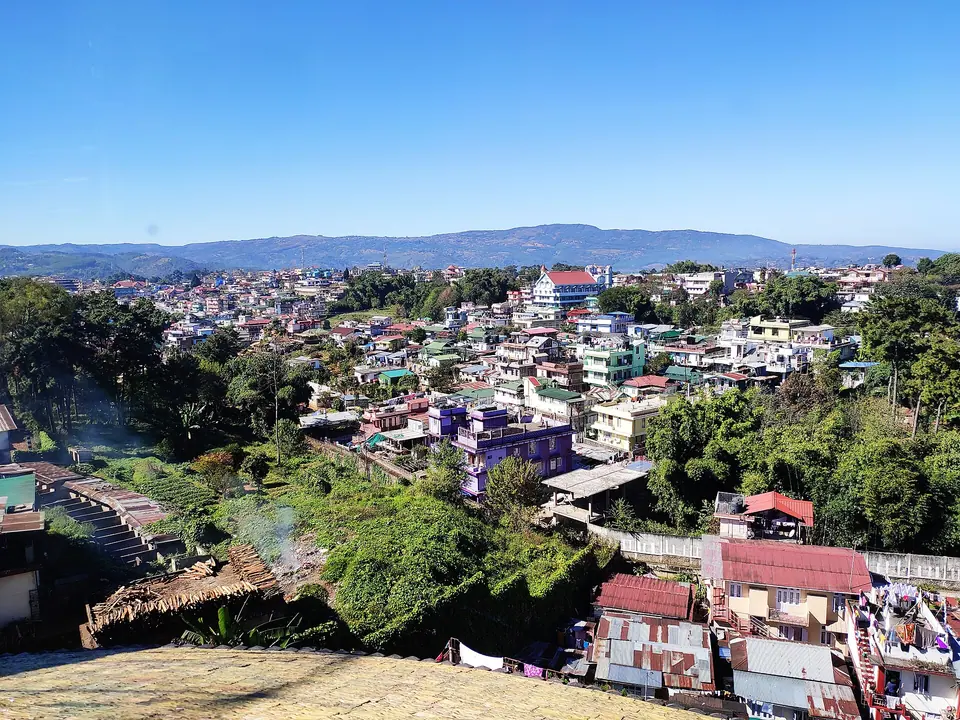 ANKAN · Commons · CC BY-SA 4.0
October is one of the best months for Meghalaya. The monsoon eases, waterfalls still run full, and Shillong sits at roughly 14–22 °C. Expect some rain in the first half, clearer skies later, and busy hotels during Durga Puja, which ends on 20 October in 2026. Book 6–8 weeks ahead for Puja dates.
Key takeaways
- October gives you monsoon-fed waterfalls with far fewer washed-out days than July or August; rain falls mostly in the first two weeks.
- Approximate October ranges: Shillong 14–22 °C, Sohra 15–24 °C, Guwahati 22–31 °C.
- Durga Puja (Vijayadashami falls on 20 October 2026) brings the month's biggest crowds and highest hotel rates.
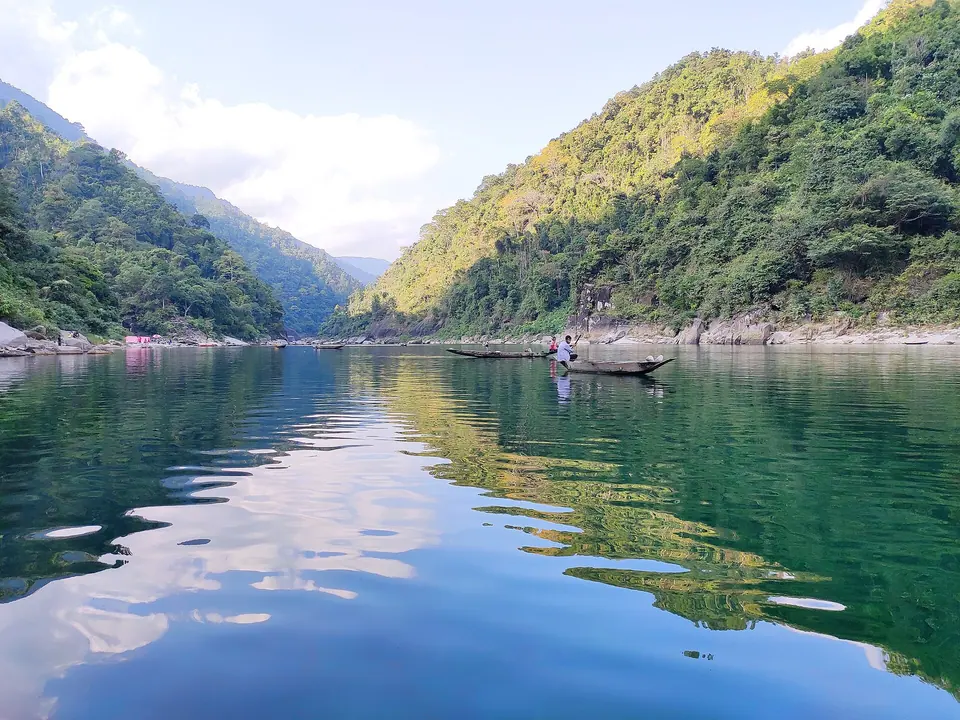
- The Umngot at Dawki clears through October; the glass-like water most photos show is more reliable from November.
- Kaziranga reopens in phases: in 2025 the Bagori range opened on 26 September, Kohora in the second week of October and elephant safaris on 1 November.
- For Puja week, book hotels and cars 6–8 weeks ahead; for the rest of October, 3–4 weeks is usually enough.
On this page 14 sections
- October weather at a glance
- What October looks like on the ground
- Dawki and the Umngot in October
- Who October suits, and who should wait
- When it rains: backups that work
- Getting around in October
- Beyond the usual loop
- Evenings and food in October
- Festivals and holidays in October
- Crowds, prices and booking lead time
- Adding Kaziranga in October
- What to pack for October
- A 5-day October plan
- How we'd plan it
- FAQs
October is when Meghalaya stops being a monsoon destination and starts being an easy one. The waterfalls are still carrying the summer's rain, the hills are at their greenest, and you can usually plan a viewpoint without a rain cloud sitting on it. We send more families to Meghalaya in October than in any month except the December holidays.
There are two catches. Rain has not fully gone in the first half of the month, and Durga Puja fills the state for about a week. Here is how to work around both.
October weather at a glance
These are long-term averages, rounded and approximate. Individual years vary, and a late monsoon can push rain well into mid-October.
| Place | Day high (approx.) | Night low (approx.) | October rainfall (approx.) |
|---|---|---|---|
| Shillong | 22 °C | 14 °C | about 200 mm |
| Sohra (Cherrapunji) | 24 °C | 15 °C | about 460 mm |
| Guwahati | 31 °C | 22 °C | about 120 mm |
| Kaziranga (Tezpur normals) | 31 °C | 22 °C | about 100 mm |
Two things stand out. First, Sohra still gets more than twice Shillong's rain, so plan the Sohra day with a buffer. Second, even Sohra's October total is about a sixth of its July total. In practice, October rain arrives as afternoon showers more often than as all-day downpours.
What October looks like on the ground
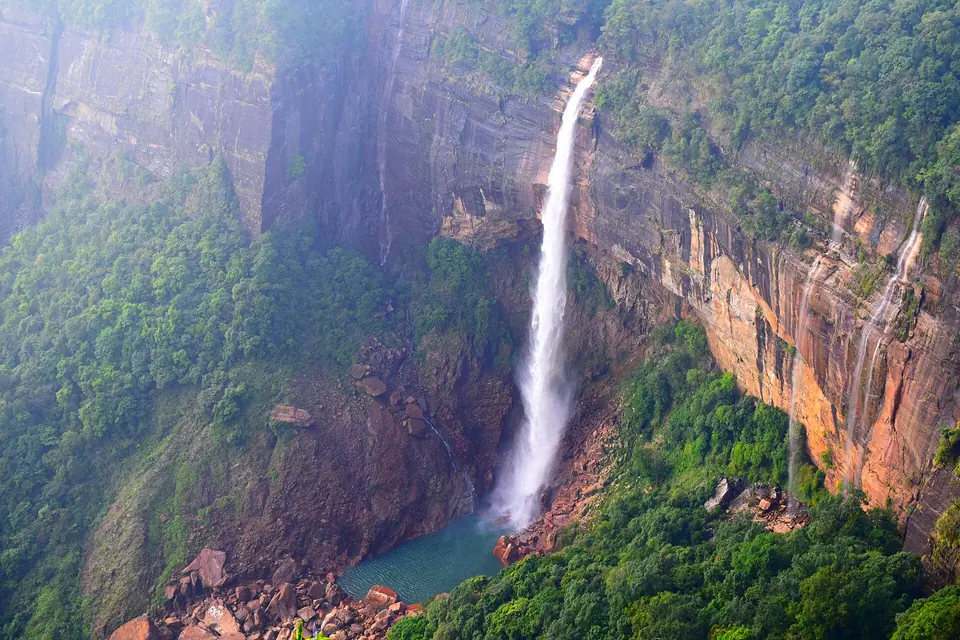
Waterfalls. Nohkalikai Falls, Seven Sisters and Kynrem are all running with volume. By December some of these thin out to threads, so October is the month for waterfall photos with a clear view.
Clouds and views. Early October mornings often start misty and clear by 10 am. From mid-month, viewpoints such as Laitlum and the Sohra valley edges are more dependable. For photography, the clearer air after the monsoon is a real advantage; our Meghalaya photography tour is timed around it.
Trails. The walk to the Double Decker root bridge at Nongriat is wet but manageable, and the natural pools are full. Read our Double Decker root bridge trek guide for the step count and timings.
Roads. The Guwahati–Shillong highway is in good shape. The Sohra and Dawki roads can have fresh repair work after the monsoon, so allow extra time.
Dawki and the Umngot in October
This is the question we get most. After the monsoon, the Umngot carries silt and runs fast. As the flow drops, clarity returns, usually over several weeks.
- Early October: often greenish and partly clear, boating subject to water levels.
- Late October: frequently clear enough to see the riverbed near the banks.
- November to March: the most reliable window for the see-through water.
If Dawki clarity is the main reason for your trip, lean towards the last week of October or later. If it is one stop among many, October is fine. Boating is controlled locally and can pause when water is high, so check current status before you travel. Our Dawki and Umngot guide has boat and parking details, and the Dawki place page covers Shnongpdeng and the border stretch.
Who October suits, and who should wait
October works well for:
- Families who want waterfalls without July's washed-out days. The paths are wet but open, and the temperatures suit children and grandparents.
- Photographers after green valleys and falls with volume. The light is softer than in December and the haze of spring has not arrived.
- First-time visitors who want Shillong, Sohra and Dawki in one short trip.
October is less ideal for:
- Travellers set on crystal-clear Dawki water. November to March is more reliable.
- Anyone who hates crowds and can only travel in Puja week. Consider the first week of December instead, which is dry and quieter before Christmas.
- Campers. Riverside camps at Shnongpdeng and elsewhere often restart only once the water drops; the season is more settled from November.
When it rains: backups that work
Even in late October, one day in three may bring a shower. We keep a rain plan for each base so no day is lost.
In Shillong: the Don Bosco Museum in Mawlai, which covers the cultures of the Northeast across several floors; Ward's Lake for a short walk once the shower passes; the Laitumkhrah and Police Bazaar cafes; and the Cathedral of Mary Help of Christians. All of these are in town and indoors or close to shelter.
In Sohra: Mawsmai Cave is lit and walkable in any weather, and rain actually improves the waterfalls. Wait out a heavy spell in a roadside tea stall and go back to the viewpoint when the cloud lifts; in October it often lifts within an hour.
At Dawki: if boating is paused, the drive via Mawlynnong and the viewpoint over the Bangladesh plains still make a full day.
The key habit is to do open-air viewpoints in the morning and keep indoor or covered stops for the afternoon.
Getting around in October
Most visitors fly into Guwahati and drive up. The Guwahati–Shillong road is about 100 km from the city, or around 120 km from the airport, and takes roughly 3–3.5 hours in October traffic. Puja week can add an hour at the Jorabat junction and the Shillong entry points.
For sightseeing within Meghalaya, local practice is to use Meghalaya-registered taxis. Cars from Guwahati can drop you in Shillong, but day trips to Sohra and Dawki are usually done in a Shillong car. Self-drive rentals for tourists have been banned in Meghalaya since June 2025, and hotels must register every guest on the state tourism app. Rules and local arrangements change, so check current status before you travel; our packages handle this for you.
Shared Sumos run between Shillong and Sohra and towards Dawki, but in Puja week seats go early in the morning and the last return vehicles leave by mid-afternoon. For a short trip, a private car saves more time than it costs.
Beyond the usual loop
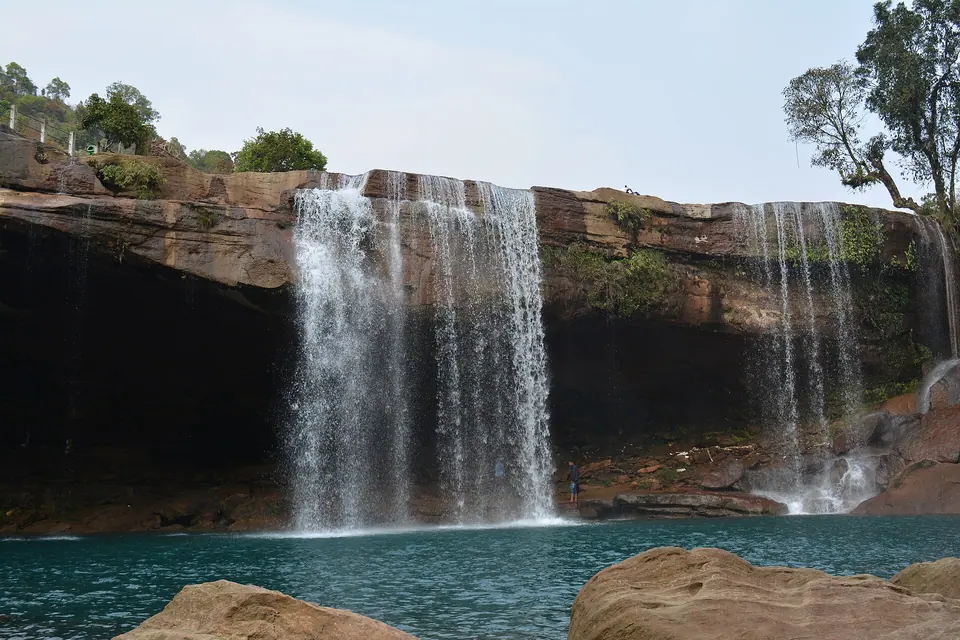
If you have an extra day, October is a good month for the Jaintia Hills east of Shillong. Krang Suri Falls near Jowai has a blue pool that is at its fullest after the monsoon, and the Nartiang monoliths are a quick detour on the same road. Swimming at Krang Suri depends on water levels and local rules on the day.
West Khasi Hills and Mawsynram also work in October, though they are wetter than Shillong. And if your trip runs into early November, a short Garo Hills extension to catch Wangala is possible from Guwahati.
Evenings and food in October
October evenings in Shillong are cool enough for a jacket and pleasant enough to walk. Laitumkhrah and Police Bazaar have most of the cafes, and live music nights are common at weekends. Khasi food is worth seeking out: jadoh (rice cooked with meat), dohneiiong (pork in black sesame) and tungrymbai (fermented soybean) are the dishes to ask for. Small local eateries near Police Bazaar serve them at lunch.
In Sohra, food options are fewer and close earlier, so eat at your hotel on the overnight. On the Dawki road, Mawlynnong has simple home-style lunches, and there are basic stalls near the Dawki bridge. Carry water and a snack on the Nongriat trek; the village has small shops, but prices rise with every step down.
Festivals and holidays in October
| Event | Where | When (2026) | What it means for you |
|---|---|---|---|
| Durga Puja | Shillong and across the Northeast | Ends with Vijayadashami on 20 October | Biggest crowds and hotel rates of the month |
| Nongkrem Dance | Smit, near Shillong | Usually October or November; dates set locally each year | Worth planning around if the dates are announced |
| Diwali | Across the region | 8 November | Second holiday rush starts in early November |
| Wangala (100 Drums) | Asanang, near Tura | Usually in November, over three days | Just outside October; plan a Garo Hills extension |
Festival dates for Nongkrem and Wangala are fixed by local organisers each year; treat the months above as approximate and check current status before you travel.
Durga Puja in Shillong is a gentler affair than in Kolkata or Guwahati, with pandals in Police Bazaar, Laitumkhrah and the older Bengali neighbourhoods. The crowd you will notice is on the road: holiday traffic to Sohra and Dawki slows the day, and car hire rates rise.
Crowds, prices and booking lead time
October splits into three parts:
- 1–10 October (approximately). Quieter, cheaper, and wetter. Good value if you are flexible about weather.
- Puja week (around 14–20 October in 2026). Peak demand. Book hotels and cars 6–8 weeks ahead, and expect some properties to set minimum stays.
- 21–31 October. Crowds thin, skies clear, rates ease. Our favourite window.
For the first and third windows, 3–4 weeks' notice is usually enough for good hotels in Shillong. Sohra has fewer quality rooms, so book those first.
Adding Kaziranga in October
Kaziranga reopens in phases after the monsoon closure. In 2025, the Bagori (Western) range reopened on 26 September ahead of Durga Puja, the Kohora (Central) range in the second week of October, and elephant safaris on 1 November. For the 2026–27 season, the park was expected to reopen in October, with standing water slowing road repairs in some ranges. By mid-November, operations are normally complete.
If your trip falls in the second half of October, adding two nights at Kaziranga is realistic. Our Shillong, Cherrapunji and Kaziranga package combines both. For the first week of October, we treat Kaziranga as a bonus rather than a promise. Park opening is set each year, so check current status before you travel.
What to pack for October
| Item | Why |
|---|---|
| Light fleece or sweater | Shillong evenings around 14 °C |
| Waterproof jacket or poncho | Afternoon showers, spray at the falls |
| Quick-dry trousers | Nongriat steps and damp viewpoints |
| Shoes with a real grip | Wet stone steps and moss |
| Small umbrella | Town walks in Shillong |
| Dry bag for phone and cash | Boat rides and waterfall spray |
| Light cotton for Guwahati | 30 °C and humid |
Leave the heavy jacket at home unless Tawang is on the plan. Our packing guide for the Northeast covers the full list, including for trips that mix plains and hills.
A 5-day October plan
This works best from mid-October.
Day 1: Guwahati to Shillong. Airport pickup, about 3–3.5 hours by road with a stop at Umiam Lake. Evening in Police Bazaar or Laitumkhrah. Stay in Shillong.
Day 2: Shillong and Laitlum. Morning at Laitlum for the valley views, then Shillong Peak (subject to access) and Elephant Falls. Early dinner.
Day 3: Sohra. Leave by 7:30 am. Nohkalikai, Seven Sisters, Mawsmai Cave, and one of the eco-parks. Overnight in Sohra so you catch the morning light.
Day 4: Nongriat or Dawki. Either the Double Decker root bridge (start before 8 am) or the drive via Mawlynnong to Dawki. Return to Shillong.
Day 5: Shillong to Guwahati. Leave by 10 am for an afternoon flight; add Kamakhya if timing allows.
How we'd plan it
For a family or couple travelling in October, we would:
- Avoid starting the trip on the Friday before Vijayadashami. Travel a few days after 20 October instead if your leave allows.
- Put the Sohra day in the middle, so a rainy morning can swap with the Shillong day.
- Book one Sohra night. Most of the rain falls in the afternoon; staying over gives you a clear morning at the viewpoints.
- Keep Dawki late in the trip so the river has an extra few days to clear.
- Add Kaziranga only after mid-month, once more routes are usually open.
Our Shillong, Cherrapunji, Dawki and Mawlynnong package follows this rhythm in four nights, and the Complete Meghalaya package adds Laitlum, Nongriat and Krang Suri for six. For how October compares with the rest of the year, see our month-by-month guide to Meghalaya.
Share your October dates with us on the contact page and we will tell you honestly whether the Puja rush affects your trip.