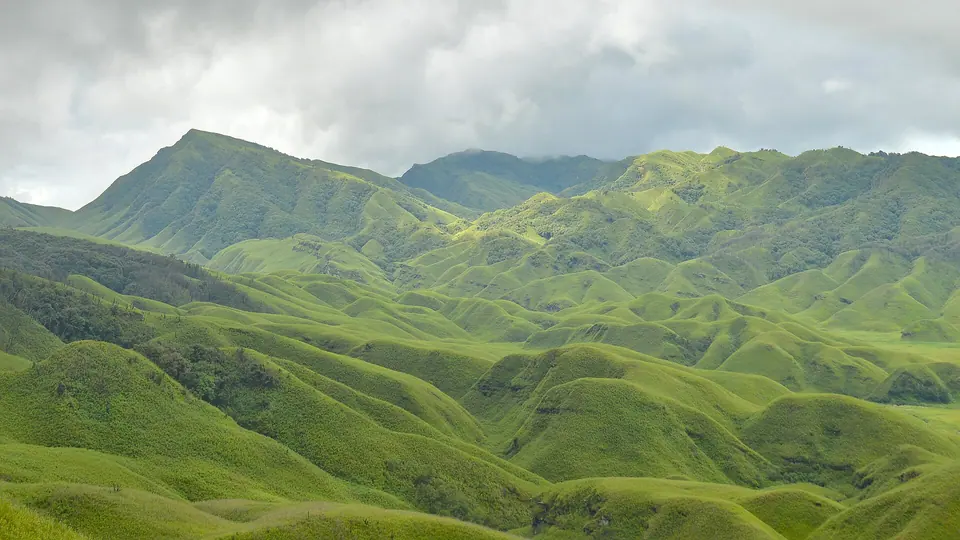
Meghalaya
Living Root Bridges Trek
- Sohra
- Nongriat Double Decker Root Bridge
- Nohkalikai Falls
- Wei Sawdong Falls
- Mawlynnong
- +1


Root-bridge trails, Dzukou Valley and village walks. Prices from ₹17,500 per person.
Plan mine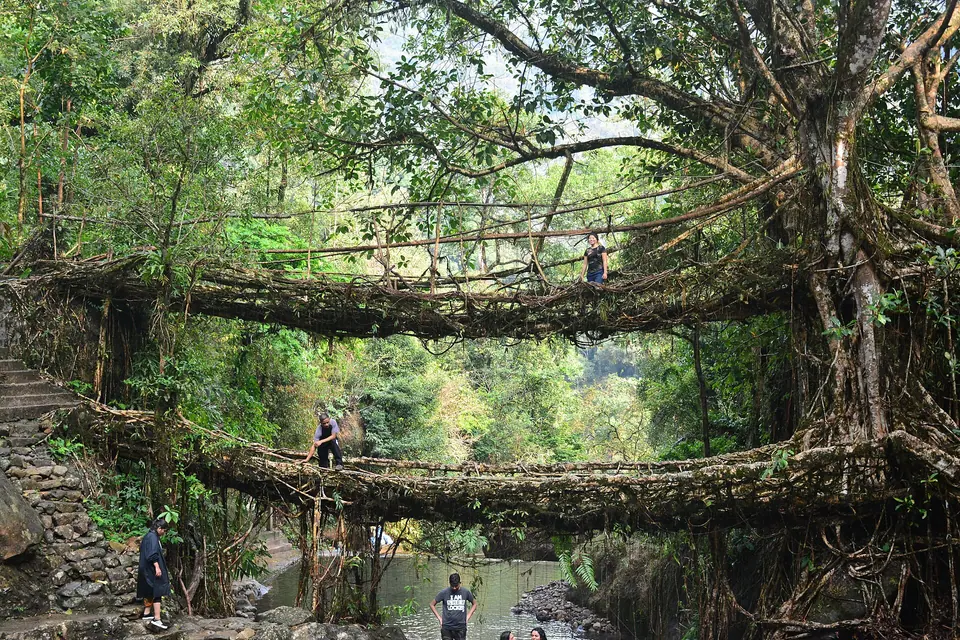 Chiranjeeb Baul · Commons · CC BY-SA 4.0
| Package | Nights | States | Best months | From |
|---|---|---|---|---|
| Living Root Bridges Trek | 5N/6D | Meghalaya | Oct–Mar | ₹18,500 |
| Dzukou Valley Trek | 4N/5D | Nagaland & more | Mar–Jul, Oct–Nov | ₹17,500 |
The route from Tyrna to Nongriat has about 3,500 concrete steps, roughly 3 km one way, and you climb the same steps back, from Nongriat at about 600 m. Going down takes 1.5 to 2.5 hours for most people and coming up takes about the same, with rests.
It is a moderate trek. The first 1.5–2 hours from the Viswema trailhead are steep steps and dirt path, then the ridge walk is mostly level. Total walking is about 4–5 hours up and 3 hours down. Anyone who can climb stairs for an hour without stopping will manage at a steady pace.
Staying in Nongriat splits the hardest part of the trek over two days, gives you the root bridge after the day crowd leaves, and lets you reach Rainbow Falls early. You also climb out at 7 am in the shade rather than in the midday heat, which makes a real difference.
Viswema is gentler and has the best views on the way in, so we use it to go up. Zakhama is steeper and shorter, mostly through thick forest, and is harder on the knees coming down. Some groups prefer going up Zakhama to get the climb over quickly, and we can reverse the route on request.
You should be able to climb stairs for two hours with short breaks, and walk 5 to 7 hours in a day. Regular walkers aged 12 to 60 generally manage well. People with knee, heart or breathing problems should talk to a doctor first. Porters are available at Tyrna for bags.
October and November give the clearest skies and golden slopes. June and July are for the Dzukou lily, though you trade that for rain and leeches. March and April bring rhododendron on the rim. December to February is dry but frosty, with nights below freezing and occasional fire bans.
It is possible but not what we recommend. From June to September the steps and rocks are slippery, the streams rise quickly after rain, and Rainbow Falls may be unsafe to reach. Guides may cut the route short. If you must go in the rains, keep a spare day and wear shoes with deep grip.
At the rest house run by the Southern Angami Youth Organisation, which has dormitories, a few private rooms and tent pitches. We book dorm bunks or bring our own two-person tents, plus sleeping bags and mats. Toilets are basic and water is from the stream, so carry purification tablets or a filter.
Since mid-2025, the East Khasi Hills district has required tourists to hire registered local guides for treks, including Nongriat and Wei Sawdong. Our price includes the guide. Rules are enforced at the trailheads and may change, so check current status before you travel.
Still wondering? Ask a trip planner
Share when you’re travelling and who’s coming. A planner replies with a day-by-day route, hotel options and a clear price, usually within a working day.
We use a few cookies
Essential storage keeps your saved trips and theme. With your OK we’d also use analytics to see which guides help people. No ads, no selling data. Cookie policy