
The route, night by night
Highest point on this trip: 2,400 m
This 5-night Hornbill trip runs Dimapur to Dimapur during the 1–10 December festival. You get two full days at Kisama Heritage Village, a night in the Angami village of Khonoma, a day hike to the Dzukou rim and the Kohima night markets. Rooms sell out by September, so book early.
The Hornbill Festival runs every year from 1 to 10 December at Kisama Heritage Village, 12 km south of Kohima. Each of Nagaland's major tribes has a morung (traditional house) on the site, and the arena hosts dances, songs, log-drum sessions and indigenous games from about 10 am to mid-afternoon. We plan two separate days at Kisama so you see different programmes, not the same dances twice.
Around the festival we add what most Hornbill visitors miss: a night in Khonoma, the Angami village that banned hunting in 1998 and built its own forest sanctuary, and a day hike from Viswema to the rim of Dzukou Valley at about 2,400 m. December is dry and clear, with Kohima dropping to 3–5°C at night, so pack warm. Kohima has limited rooms, and hotels, homestays and festival camps fill months ahead, which is why this package is priced higher than a normal Nagaland trip.
Highlights
- Two full days at Kisama Heritage Village during the 1–10 December festival
- Kohima War Cemetery on Garrison Hill, where the 1944 battle was fought across a tennis court
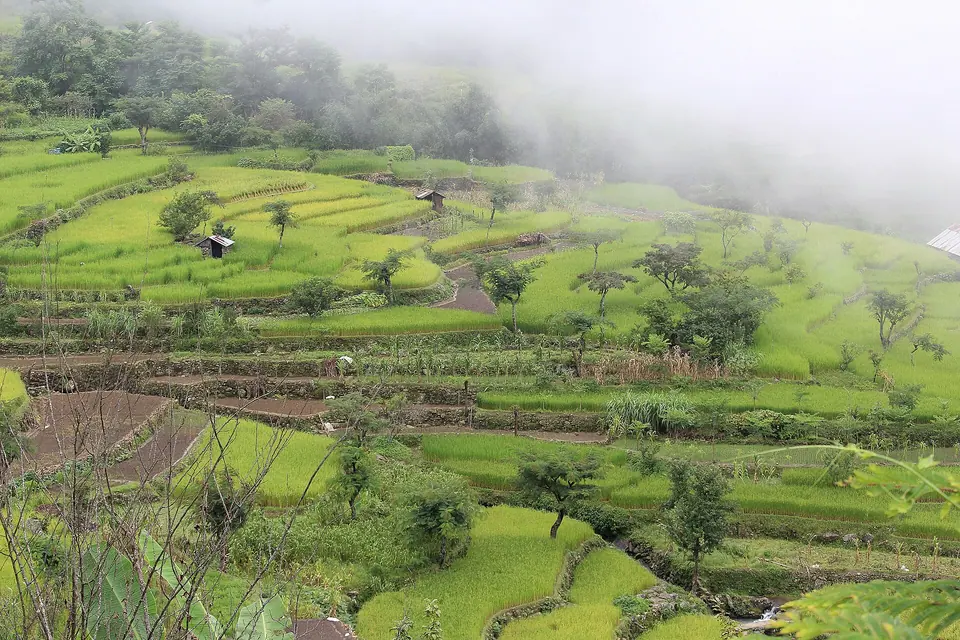
- A homestay night in Khonoma with terraced paddies and the village's own tragopan sanctuary
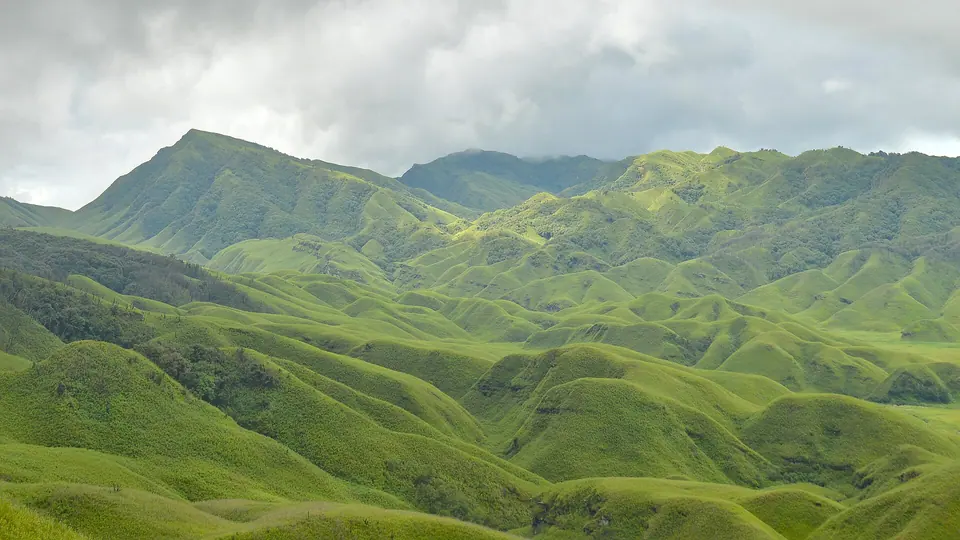
- Day hike from Viswema to the Dzukou Valley rim at about 2,400 m
- Night bazaar and street food on Kohima's main road during festival week
- Smoked pork with bamboo shoot, axone and king chilli at the Kisama food stalls
Open to foreign passport holders with the right permits. Check permits
Route, permits and road status checked
Day 1Dimapur to Kohima and the War Cemetery
- Kohima
- 1,440 m
- 75 km · 2.5–3 hrs
- Dinner
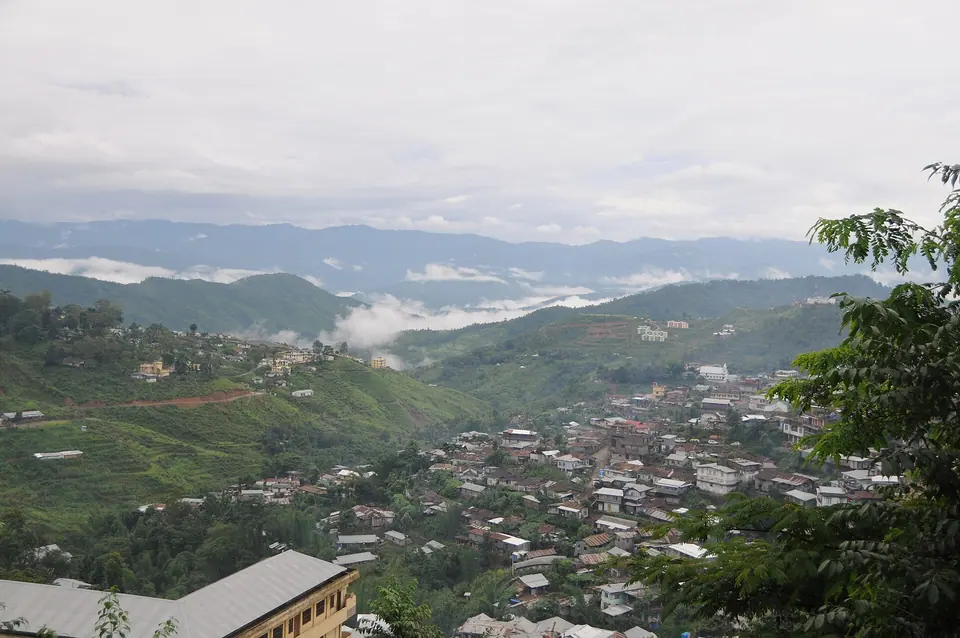
Our driver meets you at Dimapur Airport with a name board. Keep your Nagaland ILP printout or PDF handy, because it can be checked at the airport and on the highway. The 75 km road to Kohima climbs from about 150 m through Chumoukedima and the Patkai foothills, and in festival week it takes 2.5 to 3 hours with a tea stop. After check-in we visit the Kohima War Cemetery on Garrison Hill, where the April 1944 battle was fought across the District Commissioner's tennis court. The epitaph at the Second Division memorial is one of the most quoted war inscriptions anywhere. In the evening walk the night bazaar on the main road, where stalls sell wood carvings, shawls and grilled meat until late.
Day 2Full day at Kisama Heritage Village
- Kohima
- 1,440 m
- 12 km each way · 40–60 mins in festival traffic
- Breakfast, Dinner
We leave by 8.30 am, because the single road to Kisama backs up by mid-morning. The festival ground is laid out as a village of morungs, one for each major Naga tribe, built in their own architecture with carved posts, skulls of mithun and log drums. Performances in the central arena usually start around 10 am: war dances, harvest songs and games, with troupes rotating through the day. Spend the afternoon at the morungs, where each tribe cooks its own dishes, and visit the World War II museum on the site. Buy entry tickets at the gate; photography of performers is allowed, but ask before photographing elders up close. We return to Kohima before dark.
Day 3Khonoma, the green Angami village
- Khonoma
- 1,500 m
- 20 km · 45 mins
- Breakfast, Lunch, Dinner
A short drive west takes you to Khonoma, an Angami village known for resisting British forces in 1879 and, more recently, for banning hunting and logging across its forest in 1998. A village guide walks you through the stone gateways, the old defence walls and the khels, or clan quarters, then down to the terraced paddies that climb the valley in steps. The Khonoma Nature Conservation and Tragopan Sanctuary protects a large share of this land. Lunch is at the homestay, usually rice, local greens, smoked pork and chutney. In the evening your hosts light the hearth and talk about village life. Rooms are simple and clean, with hot water in buckets.
Day 4Day hike to the Dzukou Valley rim
- Kohima
- 1,440 m
- 70 km in total · 3 hrs, plus 5–6 hrs walking
- Breakfast, Packed lunch, Dinner
We start at 6 am for Viswema village, about 40 km from Khonoma, then take the rough link road to the trailhead. From there the path climbs steeply for 1.5 to 2 hours through forest to the rim, then flattens out along a ridge of dwarf bamboo with the first views into Dzukou at around 2,400 m. In December the grass is gold, the sky is usually clear and you may see frost in shaded spots. We turn around by noon so you are back at the vehicle by 3 pm and in Kohima by 4.30 pm. If you would rather not hike, take a second full day at Kisama instead. Carry water, snacks and a warm layer.
Day 5Second Kisama day and Kigwema village
- Kohima
- 1,440 m
- 30 km in total · 1.5 hrs
- Breakfast, Dinner
The festival programme changes daily, so your second day at Kisama shows different tribes on stage and often includes indigenous games, archery and the crafts bazaar at its fullest. The food stalls are busiest at lunch, which is the best time to try rice beer and smoked meats. In the afternoon we walk into Kigwema, the Angami village right next to the festival ground, with its carved gates and stone sitting circles. Many visitors stay in Kigwema homestays during Hornbill, and the village feels far calmer than Kisama. In the evening you can join the music events in Kohima town, which in recent years have included rock and indie gigs through the festival week.
Day 6Kohima to Dimapur for departure
- Departure
- 150 m
- 75 km · 2.5–3 hrs
- Breakfast
We leave Kohima by 8 am, which gives enough buffer for the slow stretches of the Dimapur road and festival traffic. On the way down, the road drops through Piphema and Chumoukedima, and you can stop at roadside stalls for oranges, which are in season in December. If your flight is after 2 pm, we can stop at the Kachari ruins in Dimapur, a group of mushroom-topped sandstone pillars left by the old Dimasa Kachari kingdom. Our driver drops you at Dimapur Airport at least two hours before departure. If you are continuing to Kaziranga or Guwahati instead, we can arrange a vehicle onward from Dimapur.
Choose your stays
Prices shown are for Standard. We confirm exact hotels when you book.
Hotel Japfu, Kohima, or a Kigwema or Jotsoma village homestay, or similar; Dovipie Inn homestay, Khonoma, or similar. Festival tent camps near Kisama on request. All must be booked by early autumn.
Hotel Vivor or De Oriental Grand, Kohima, or similar; Dovipie Inn homestay, Khonoma, or similar
Niraamaya Retreats Aradura, Kohima, or similar; Kohima has no five-star hotel, and this tier sells out first
Included
- 5 nights' accommodation on twin sharing: 4 nights in Kohima, 1 night in a Khonoma homestay
- Daily breakfast and dinner, plus lunch in Khonoma and a packed lunch on the Dzukou hike
- Private vehicle (Innova, Xylo or similar) for all transfers and sightseeing
- Dimapur Airport pickup and drop
- Two return transfers to Kisama with early departures to beat traffic
- Local village guide in Khonoma
- Local guide for the Dzukou rim hike
- Help with the Nagaland ILP application
- Driver allowance, fuel, tolls and parking
- WhatsApp support from our desk through the trip
Not included
- Flights or trains to and from Dimapur
- Nagaland ILP fee
- Hornbill Festival entry tickets and camera fees
- Dzukou and village entry fees
- Lunches except where listed, drinks and snacks
- Paid events such as ticketed concerts
- Tips, laundry and personal expenses
- Travel insurance
- Costs from flight delays, landslides or road closures
Good to know
- Hornbill Festival is held every year from 1 to 10 December at Kisama. Dates have stayed fixed for years, but check current status before you travel.
- Indian citizens need a Nagaland Inner Line Permit, applied for online only at ilp.nagaland.gov.in (₹200 for 30 days at the last revision). Dimapur is under the ILP system, so get it before you fly. Check current status before you travel.
- Foreign nationals need a Protected Area Permit for Nagaland since the relaxation was withdrawn in December 2024. For the 2025 festival the government relaxed the PAP for 1–10 December; check current status before you travel.
- Kohima nights fall to 3–5°C in December, and Dzukou can go below freezing. Bring a down jacket, thermals, gloves and good walking shoes.
- Rooms in Kohima are limited and festival rates run two to three times normal. We hold rooms only against an advance, so book by August or September.
- Nagaland is a dry state under the NLTP Act. Rice beer is served at the festival, but do not carry liquor across the state border.
Hornbill Festival, Kohima: questions
01When is the Hornbill Festival held?
The Hornbill Festival runs from 1 to 10 December every year at Kisama Heritage Village, about 12 km south of Kohima. The dates have been fixed for many years and 1 December is also Nagaland Statehood Day. We still suggest you confirm the programme once the state tourism department publishes it, usually in October or November.
02How much does a Hornbill Festival package cost?
This 5-night package starts at ₹34,500 per person on twin sharing with standard rooms or homestays. The price is higher than a normal Nagaland trip because Kohima hotels charge festival rates for the first ten days of December. Premium and luxury rooms, or a smaller group, raise the per-person cost.
03Do I need a permit to attend Hornbill?
Indian citizens need a Nagaland Inner Line Permit, which you apply for online and carry as a printout or PDF. Foreign nationals need a Protected Area Permit; the government relaxed it for the 2025 festival, but that was a temporary measure. Check current status before you travel and before you book flights.
04Where should I stay during Hornbill?
Kohima hotels are closest to shops and evening events, while homestays in Kigwema and Jotsoma are quieter and nearer Kisama. Tent camps also come up near the festival ground each year. Whatever you choose, book by August or September, because Kohima has limited rooms and most go to early bookers.
05How many days should I spend at Kisama?
Two days is the right amount for most people. The arena programme changes daily, so the second visit shows different tribes and games. A third day tends to repeat. We use the other days for Khonoma and Dzukou, which show village life and landscape that the festival ground cannot.
06Is the Dzukou hike hard?
The climb from the Viswema trailhead to the rim is steep for 1.5 to 2 hours, then easy along the ridge. Anyone who walks regularly can manage it at a steady pace. We only go to the rim and back as a day hike, not down to the valley floor, and you can swap it for a second Kisama day.
07What is the weather like in Kohima in December?
December is dry with clear mornings. Daytime temperatures in Kohima are around 15–18°C and nights drop to 3–5°C. At the Dzukou rim it can fall below freezing overnight, and frost is common. Rooms often lack central heating, so warm clothing matters more than in most Indian winters.
08Can I try Naga food at the festival?
Yes. Each tribe's morung cooks its own food, and you will find smoked pork with bamboo shoot, pork with axone (fermented soybean), rice beer and dishes with king chilli. Vegetarian options are fewer but available at stalls and in Kohima hotels. Tell us your diet and we will brief your homestay in Khonoma.
09Can I extend this trip to Kaziranga?
Yes. Kaziranga is about 200 km from Kohima via Dimapur and Golaghat, roughly six hours by road, and the park is open for safaris in December. Adding two nights there makes a good 7-night trip. We can also end in Guwahati instead of Dimapur if that suits your flights.
Still wondering? Ask a trip planner
You might also like
Guides for this trip
Northeast in December: Snow, Hornbill and Christmas Plans
Hornbill Festival 2026: Dates, Permits, Tickets and Stays
Northeast India Festivals: 2026–27 Calendar by Month
Want this trip your way
Change the pace, swap a place or add a safari. Tell us what to adjust and we’ll send a revised plan and price.