
The double decker living root bridge is in Nongriat village, below Sohra in Meghalaya's East Khasi Hills, about 65 km (2.5 hours) from Shillong. You reach it on foot from Tyrna, down roughly 3,500 steps, then climb the same way back. Allow 5 to 7 hours return. Small village fees apply; the trail has been closed on Sundays.
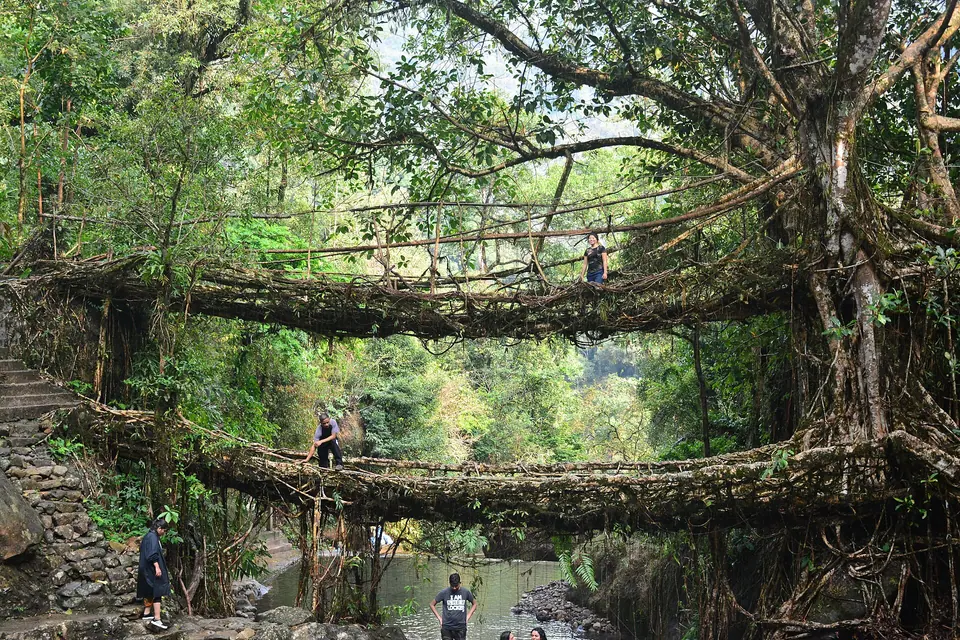
Khasi villages in the valleys below Sohra have grown bridges for generations by training the aerial roots of rubber fig trees across streams, then letting them thicken and knot together over decades. At Nongriat, two such bridges grow one above the other over the same stream, and that is the double decker most people come to see. Living root bridge landscapes of Meghalaya were placed on UNESCO's tentative list of World Heritage sites in 2022.
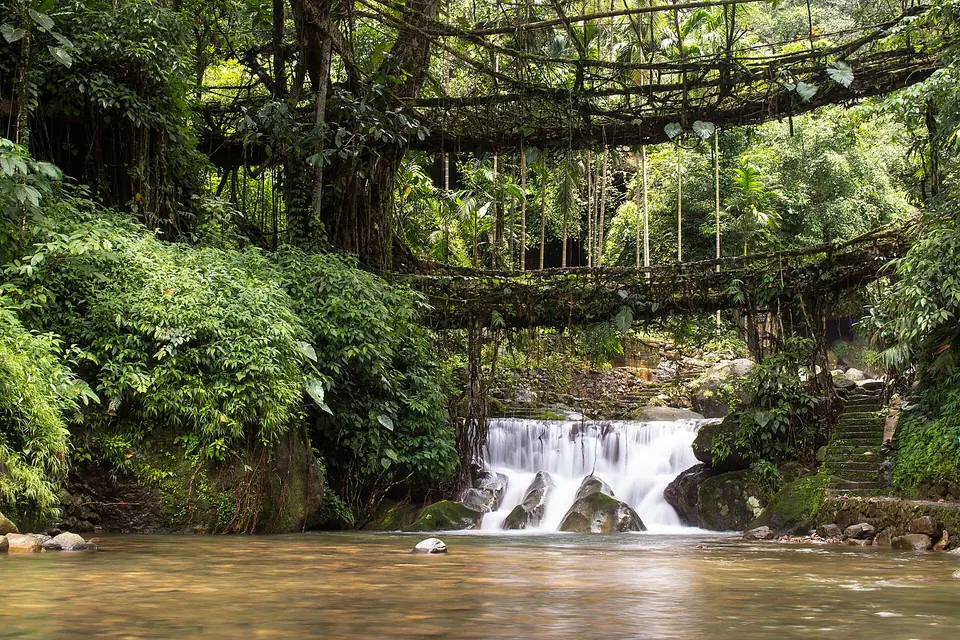
The only way in is on foot. From the road-end at Tyrna village, a concrete stairway of roughly 3,500 steps drops about 3 km through forest and betel nut groves, past smaller root bridges and over two steel-cable suspension bridges above boulder-filled rivers. The double decker sits at the edge of Nongriat village, with a natural pool below it.
The descent is easy on the lungs and hard on the knees; the climb back is the real test, usually 2 to 3 hours for a reasonably fit adult. We suggest staying a night in Nongriat if you can, which lets you walk on to Rainbow Falls, 1 to 1.5 hours further, and climb out in the cool of the next morning.
What makes it worth the trip
The double decker
Two living root bridges stacked over one stream, grown and maintained by the village over a long period.
Suspension bridges
Two steel-cable footbridges swing over blue-green rivers on the way down; cross one person at a time if asked.
Rainbow Falls
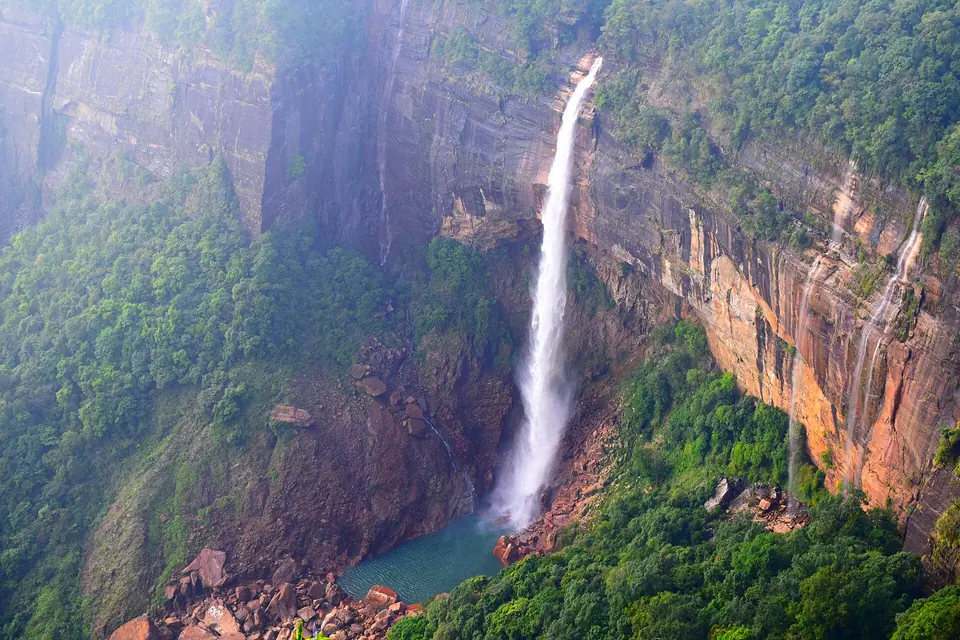
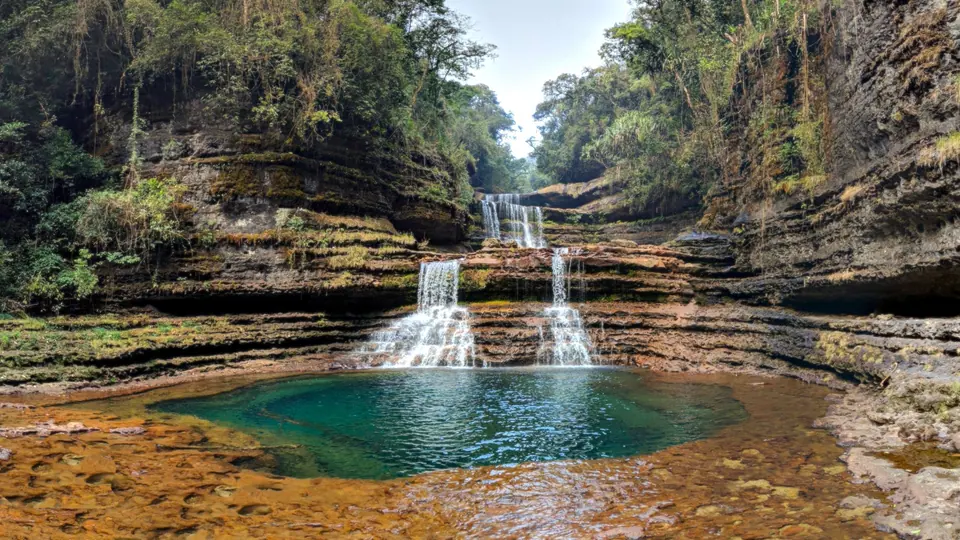
A waterfall and deep blue pool 1 to 1.5 hours beyond Nongriat; on sunny mornings spray can show a rainbow.
Natural pools
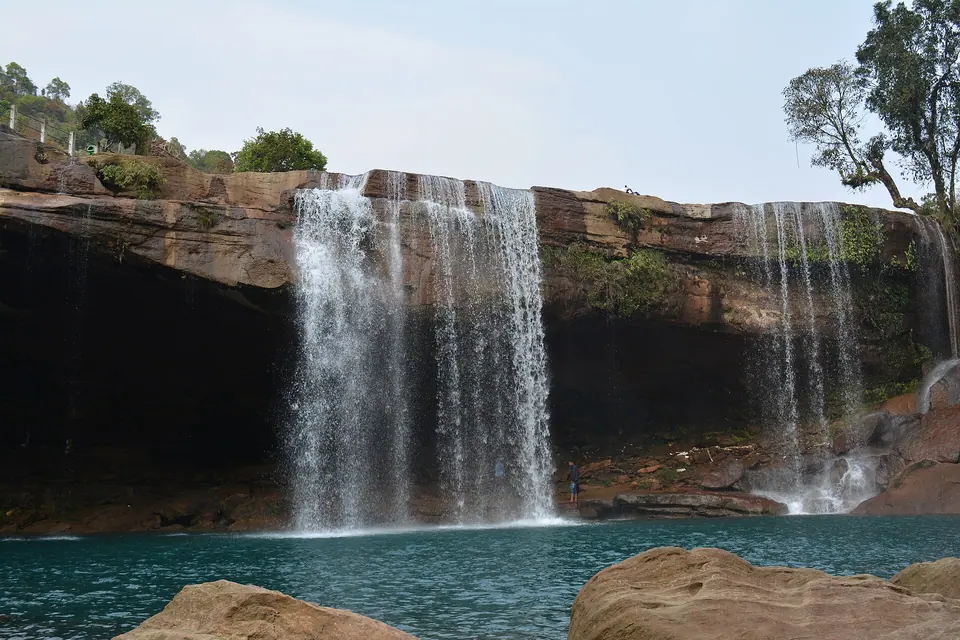
Clear pools below the double decker and along the stream are good for a rest and a paddle in the dry season.
Village life
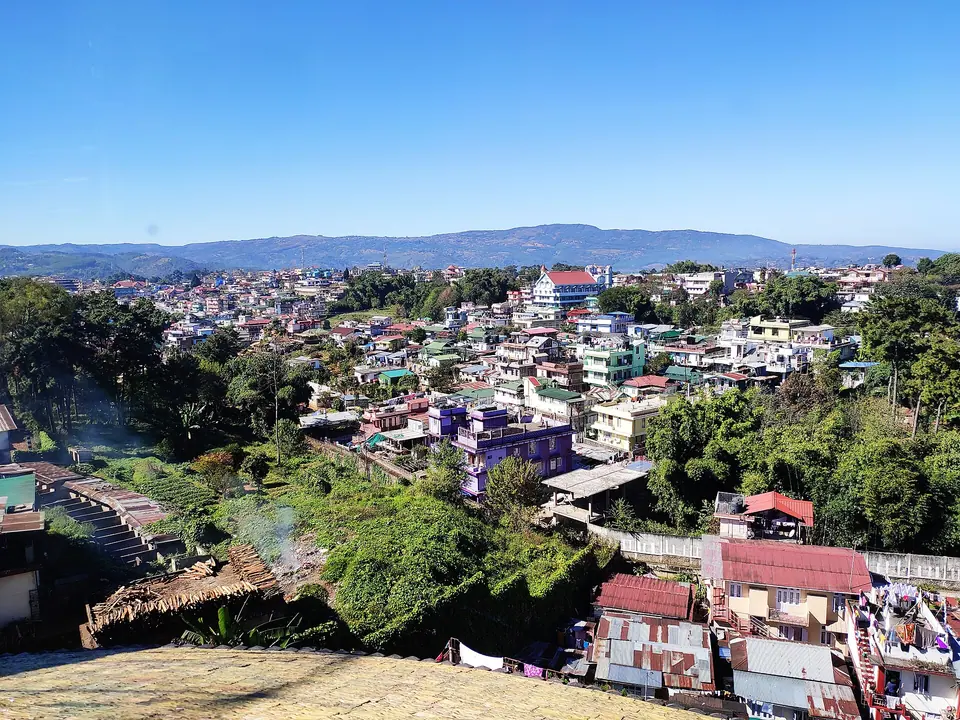
Nongriat is a working village with homestays, small shops and paths used daily by residents.
 Chiranjeeb Baul · Commons · CC BY-SA 4.0
 Jayesh minde · Commons · CC BY-SA 4.0
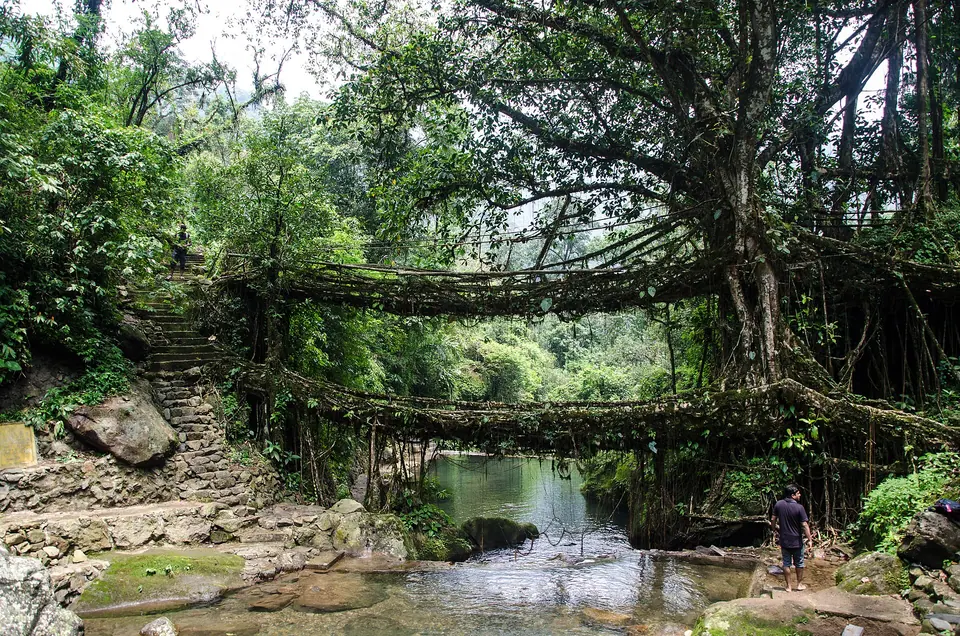 Ashwin Kumar · Commons · CC BY-SA 2.0
Things to do
- Walk down from Tyrna to the double decker root bridge
- Cross the suspension bridges above the river on the way
- Rest at the pools below the double decker
- Continue to Rainbow Falls with a local guide
- Stay overnight in a Nongriat homestay and climb out early
- See the single-decker root bridges along the trail
- Hire a local guide to learn how the bridges are grown and repaired
Getting there
The trek starts at Tyrna village, about 12 km from Sohra market and about 65 km from Shillong, roughly 2.5 hours by car. Taxis drop you at the road-end in Tyrna, where there are small shops, parking and guides; from there it is about 3,500 steps and roughly 3 km down to Nongriat. Start walking by 8 or 9 am on a day trip. There is no road to Nongriat, so porters are the only help with bags. From Guwahati, stay a night in Shillong or Sohra first.
Where to stay
Nongriat village has several simple family-run homestays with basic rooms, shared bathrooms and home-cooked meals; book through a Sohra contact or ask on arrival in the dry season, as rooms are few. Staying here breaks the climb and lets you reach Rainbow Falls. If you prefer comfort, stay in Sohra: Cherrapunjee Holiday Resort at Laitkynsew is known for its trekking advice, and homestays on the Tyrna road put you close to the start. Carry cash; there is no ATM below Tyrna.
Local tips
- The trail has been closed to tourists on Sundays since 2021; check current status before you travel
- Start down by 9 am on a day trip so you finish the climb before dark
- Wear trekking shoes with grip, and use a stick if your knees are weak
- Carry 2 litres of water per person and snacks; shops en route are small
- Hire a guide at Tyrna if you plan to go on to Rainbow Falls
- Do not swim in the pools after rain; water rises quickly
Rain and weather
Source: IMD 1991–2020 normals
October to March for dry steps and clear pools; the monsoon makes the trail slippery and the rivers fast.