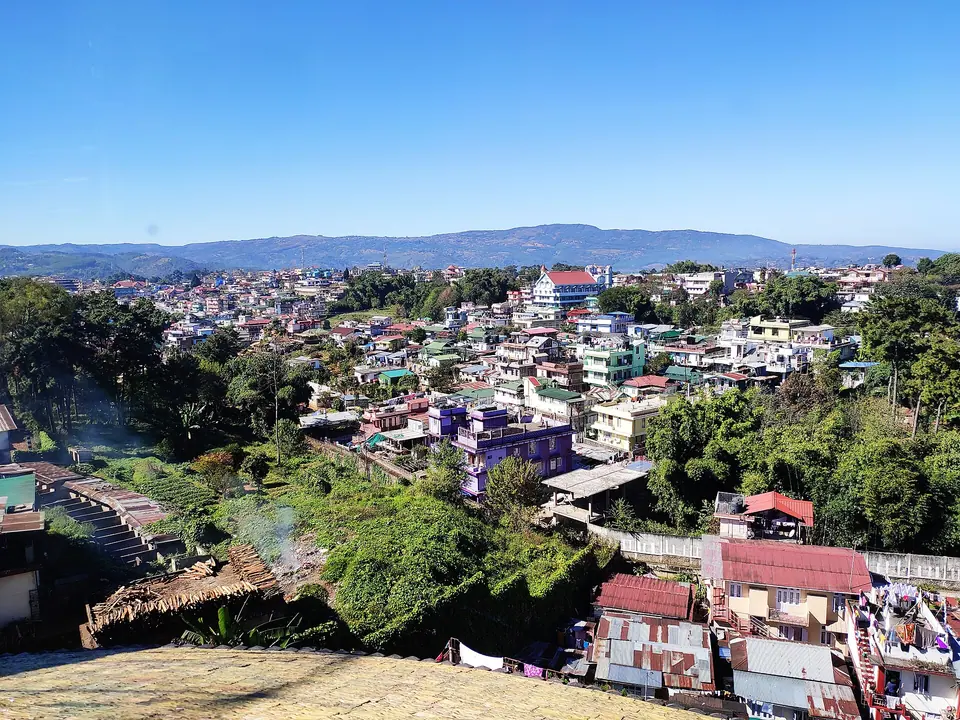

Dawki Umngot River Guide: Boating, Season and Route
Dawki and the Umngot River: when the water is clear, boat fares and timings, Shnongpdeng camping, the drive from Shillong and how to pair it with Mawlynnong.
Shillong Trip Travel Desk · Updated · 9 min read
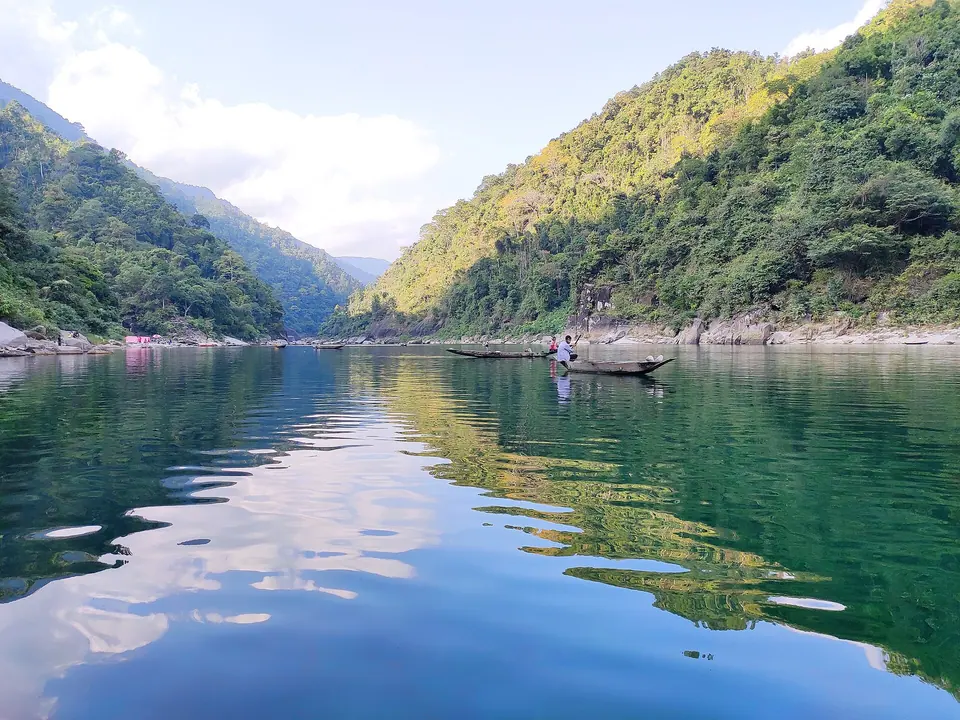 ANKAN · Commons · CC BY-SA 4.0
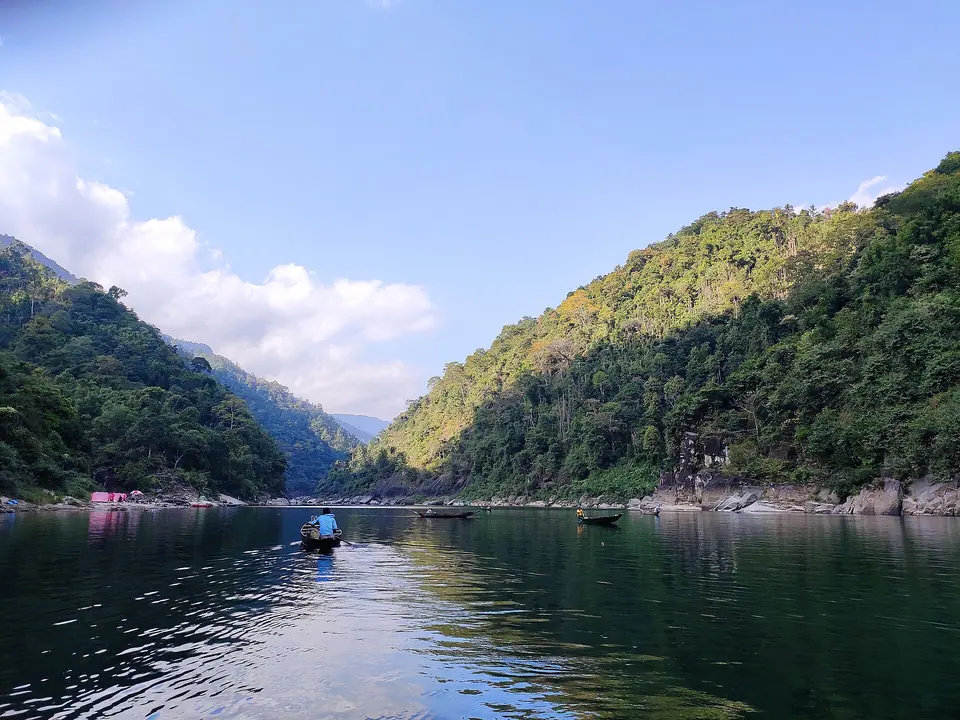
The Umngot at Dawki, 82 km (2.5 to 3 hours) from Shillong on the Bangladesh border, is so clear that boats seem to float on air. Go November to April and board before 9 am. Boats seat four or five, run 30 to 45 minutes and are priced per boat. Boating often stops in the monsoon.
Key takeaways
- The Umngot is clearest from November to April, and January to March gives the famous floating-boat look
- Dawki is about 82 km from Shillong, a 2.5 to 3-hour drive via Pynursla; Mawlynnong is about an hour away
- Boats seat four or five and run 30 to 45 minutes; fares are set per boat at the ghat, so agree the fare before you board
- Shnongpdeng, 8 km upstream, is quieter and has camping, kayaking, snorkelling and marked jumping rocks
- From June to September the river runs muddy and fast, and boating is often suspended
- Reach the ghat by 7.30 or 8 am; by 10 am on winter weekends boat queues can run over an hour
On this page 14 sections
- Dawki at a glance
- Why the water is so clear
- When to go
- Boating at Dawki: how it works
- Shnongpdeng: the quieter stretch upstream
- A Dawki morning, hour by hour
- Photographing the river
- Where to stay near the river
- Mistakes to avoid
- Getting there
- What else is nearby
- Practical tips
- Dawki with children, seniors and couples
- How we'd plan it
- FAQs
At 8 am on a February morning the Umngot is so clear that the boat's shadow falls on the riverbed, six or eight metres down, and you can count the pebbles under it. By 11 am the same stretch is packed with boats, and by July the river is brown and roaring. Dawki is all about timing.
We send guests to Dawki in almost every month from October to May. This guide covers when the river is clear, what the boats cost, how Dawki differs from Shnongpdeng upstream, and how to fit it into a Meghalaya trip without spending the whole day in a queue.
Dawki at a glance
| Detail | What to know |
|---|---|
| Location | Dawki, West Jaintia Hills, Meghalaya, on the India-Bangladesh border |
| River | Umngot, flowing south into Bangladesh |
| Distance from Shillong | About 82 km, 2.5 to 3 hours |
| Distance from Mawlynnong | About an hour by road |
| Height at the river | Around 60 m above sea level |
| Clearest water | November to April, best January to March |
| Boat ride | 30 to 45 minutes, 4 or 5 people per boat |
| Boat fare | Priced per boat; agree the fare at the ghat |
| Monsoon | Boating often suspended June to September |
| Permit | None for Indian citizens; photo ID for hotel registration |
Why the water is so clear
The Umngot drains the southern slopes of the Khasi and Jaintia Hills, and in the dry season it carries very little silt. The riverbed is stony, the flow slows in winter, and the water becomes clear enough that sunlight reaches the bottom. On a still morning, with the sun overhead, boats cast sharp shadows on the stones, which is where the "floating boat" photographs come from.
Two things spoil it: rain, which washes soil into the river, and afternoon wind, which ruffles the surface. That is why the same place can look completely different at 8 am and 2 pm, and why we push our guests to be on the water early.
Villages along the river also play their part. Several, including Shnongpdeng, have local rules against plastic, soap and littering along the banks. Follow them.
When to go
| Months | River | Boating | Our view |
|---|---|---|---|
| October | Clearing, still some silt early in the month | Usually resumes | Fair, improving |
| November to December | Clear, cool mornings | Running | Very good |
| January to March | Clearest and calmest | Running | Best |
| April to May | Clear in mornings, storms in afternoons | Running, storm breaks | Good, go early |
| June to September | Muddy, fast, deep | Often suspended | Skip for boating |
Boating rules in the monsoon depend on the water level and local orders, so check current status before you travel. For the wider weather picture across the state, see our best time to visit Meghalaya guide.
Best time of day
- 7.30 to 9 am: clearest view, calm water, short queues. This is when we book our guests.
- 9 to 11 am: still good light, but crowds build quickly from 10 am as Shillong day-trippers arrive.
- After noon: longer queues, more boats on the water, wind on the surface. Photographs lose the floating look.
Boating at Dawki: how it works
The main boating ghat is near the Dawki bridge. Boats are wooden, rowed or poled by local boatmen, and seat four or five people with life jackets. A standard ride runs 30 to 45 minutes upstream and back, past rock faces and the stretch where the river is widest and clearest.
Things to know:
- Fares are set per boat at the ghat by the local boat association and vary with the route and season. Agree the fare before you board. There is usually a small parking and entry charge as well, typically under INR 100 per person.
- Cash only, in small notes.
- Queues are long on weekends and during Durga Puja, Christmas and New Year. At peak times the wait can pass an hour after 10 am.
- Life jackets are mandatory. Keep them on for the whole ride.
- Stay seated when the boat moves and do not lean out for photos.
- Border markers: part of the river is close to the international border. Boatmen know where they can go; follow their lead.
The 1932 Dawki suspension bridge, built by the British, crosses the river just above the ghat. Walk onto it for the classic view down to the boats. Heavy trucks use the bridge for cross-border trade, so stay on the footpath.
Shnongpdeng: the quieter stretch upstream
About 8 km upstream from Dawki, Shnongpdeng is a village on a wide, shallow bend of the same river. It is the place we send guests who want to spend a day on the water rather than 40 minutes in a boat.
What you can do at Shnongpdeng:
- Boating, usually cheaper and less crowded than at Dawki
- Kayaking in calm sections
- Snorkelling in the clear shallows from November to March
- Jumping from marked rocks into deep pools, with a life jacket and an operator present
- Walking across the hanging footbridge over the river
- Camping on the stony riverbank in operator-run tents
Operators and rates are local and change by season, so we confirm them on the day. Camps have basic shared or attached washrooms and limited power; carry a torch and a power bank. Our three-night Umngot River and Mawlynnong trip, from INR 13,500 per person, spends a full day and a night at a Shnongpdeng camp after the early Dawki boat.
A Dawki morning, hour by hour
This is how a February morning runs for guests who stay in Mawlynnong the night before.
- 6.30 am: Leave Mawlynnong with a packed breakfast. The road down is empty and often misty.
- 7.30 am: Reach the Dawki ghat, pay parking and the boat fare, pull on life jackets.
- 7.45 to 8.30 am: Boat ride upstream and back. The sun is high enough to light the riverbed, and there are only a handful of boats on the water.
- 8.45 am: Walk onto the 1932 suspension bridge for the view down the river, then tea at a stall near the ghat.
- 9.30 am: Drive 8 km upstream to Shnongpdeng for a slower river day, or head back up towards Shillong.
By 10.30 am, when the first Shillong day-trippers are joining the queue, you are already done.
Photographing the river
The floating-boat picture is the reason many people come, and it needs three things: clear water, still water and light from above.
- Shoot from the bridge or a high bank looking down, not from inside the boat looking across.
- Go between 8 and 10 am on a sunny day. Before 8 am the valley can be in shade; after 11 am wind ruffles the surface.
- Use a polarising filter if you have one. It cuts the surface glare and shows the riverbed.
- Phones work well from the bridge; switch off the flash and tap to expose for the water, not the sky.
- Drones need permission near an international border. Do not fly one at Dawki.
Where to stay near the river
You do not have to sleep in Shillong to see Dawki. The options, from closest to the water:
- Shnongpdeng riverside camps. Tents on the stony bank, basic shared or attached washrooms, dinner at the camp. The most memorable night, not the most comfortable.
- Guesthouses in and around Dawki. Simple rooms, useful for an early start, but the town is a busy border trading post with truck traffic.
- Mawlynnong and nearby village homestays. Clean, quiet and about an hour away. Our usual choice for families.
- Shillong hotels. The widest choice, but a 6 am departure for an early boat.
Book camps and Mawlynnong homestays ahead for December weekends and the Christmas to New Year week.
Mistakes to avoid
- Arriving at noon on a Sunday. The river is crowded, the water is ruffled and the queue can take longer than the ride.
- Going in July for the photos. The monsoon river is brown and boats may not run.
- Doing Dawki, Mawlynnong and Sohra in one day from Shillong. It is well over 250 km of hill roads. Pick two.
- Not carrying cash. Boats, parking and village fees are cash only.
- Jumping or swimming outside marked areas. The river has deep pools and currents even when it looks calm.
Getting there
From Shillong
The road from Shillong runs south through Laitlyngkot and Pynursla along a ridge with long views, then drops steeply to the river. It is about 82 km and takes 2.5 to 3 hours. The last 20 km are a series of tight bends; if anyone in your group gets carsick, take tablets before Pynursla.
Leave by 6 am to reach the ghat before 9 am. Shared taxis to Dawki leave from Shillong's Bara Bazar area in the morning, but they arrive later than a private car and the return is less certain.
From Mawlynnong
Mawlynnong is the best base for an early boat. It is about an hour from Dawki by road. Stay the night, leave at 6.30 am with a packed breakfast, and you will be among the first boats of the day.
From Jowai and the Jaintia Hills
Dawki is also reachable from Jowai through Amlarem, passing close to Krang Suri Falls. This makes a good loop for travellers exploring the Jaintia Hills.
What else is nearby
| Place | Distance from Dawki | Why go |
|---|---|---|
| Shnongpdeng | About 8 km | Quieter river, camping, water sports |
| Mawlynnong and the Riwai root bridge | About 1 hour | Clean village lanes, a single living root bridge |
| Krang Suri Falls | About 1.5 hours via Amlarem | Blue pool below a waterfall, best October to May |
| Pynursla viewpoints | On the Shillong road | Ridge views over the valleys towards Bangladesh |
Our Mawlynnong village guide covers the village, the Sky View platform and the Riwai bridge in detail.
Practical tips
- Carry cash. There are few ATMs near the river and card payments are rare. Carry enough in small notes for the boat, parking and village fees for the whole group.
- Waterproof your phone with a pouch if you plan to kayak or snorkel.
- Wear sandals with straps on the stony banks; the rocks are slippery near the water.
- Carry a warm layer in December and January for the early drive; the river bank itself is warm by 10 am.
- Sunscreen and a hat from March, when the valley gets hot by midday.
- Photo ID for every adult. Hotels, homestays and camps register every guest on Meghalaya's system.
- Respect the border. Do not walk or boat beyond marked limits, and do not photograph border security installations.
- No plastic in the river. Villages fine littering and some ban soap and shampoo on the banks.
Dawki with children, seniors and couples
The boat ride itself is easy for all ages, and children love the clear water. The harder part is the drive: nearly six hours round trip from Shillong on winding roads. For families with young children or seniors, we always split it with a night in Mawlynnong so that no day has more than three hours in the car.
For couples, a Shnongpdeng camp night by the river is one of the most memorable nights in Meghalaya; our Meghalaya honeymoon trip, from INR 22,500 per person, includes Dawki. On a tight budget, the Meghalaya on a Budget trip, from INR 11,500 per person, covers Dawki with Shillong and Sohra.
How we'd plan it
We plan Dawki around one goal: be on the water before 9 am.
- Shillong, night 1. Arrive from Guwahati and settle in.
- Mawlynnong, night 2. Drive down after breakfast, walk the village and the Riwai root bridge in the afternoon.
- Dawki at dawn, then Shnongpdeng, night 3. First boats at 7.30 am, then a river day and a camp night upstream.
- Back to Guwahati. A long drive of about 6 hours; book flights after 5 pm.
On a shorter trip, our four-night Shillong, Cherrapunji, Dawki and Mawlynnong itinerary, from INR 16,500 per person, fits an early Dawki boat into the classic loop. For more water and caves, see our five-night Caves, Canyons and Camping trip, from INR 21,500 per person, which includes a Shnongpdeng night, and for a wider circuit through Jowai and Krang Suri, our Jaintia Hills trip.
Tell us your dates on the contact page and we will plan the early boat for you.