
Mawlynnong Village: Visiting Asia's Cleanest Village
Mawlynnong village guide: the Sunday rule for day visitors, how to reach from Shillong, the Riwai root bridge, homestays and how to pair it with Dawki.
Shillong Trip Travel Desk · Updated · 9 min read
 Sujan Bandyopadhyay · Commons · CC BY-SA 4.0
Mawlynnong is a Khasi village about 90 km from Shillong, near the Bangladesh border, called Asia's cleanest village by Discover India magazine in 2003. Visit Monday to Saturday: since January 2026, day visitors are not allowed on Sundays. Allow two to three hours, add the Riwai root bridge, and pair it with Dawki.
Key takeaways
- Mawlynnong is about 90 km from Shillong, roughly two and a half to three hours by road, in East Khasi Hills near the Bangladesh border.
- Since January 2026, the village council has barred day visitors on Sundays; overnight homestay guests are still welcome.
- The 'cleanest village' title came from Discover India magazine in 2003, and the habits behind it are still visible: bamboo dustbins, swept lanes and bans on plastic and smoking.
- Riwai's living root bridge, a bamboo viewing platform and the village lanes take two to three hours in all.
- Dawki and the Umngot River are about an hour away, so most visitors combine the two in one day or stay a night.
- Expect small community fees and parking charges, typically under ₹100 per person; carry cash.
On this page 15 sections
- Mawlynnong at a glance
- The Sunday rule
- What makes the village different
- Things to do in Mawlynnong
- Getting there
- Mawlynnong and Dawki in one day
- Staying overnight
- Best time to visit
- How to be a good visitor
- Food in and around the village
- Mawlynnong with children or older parents
- Photography tips
- Mistakes we see
- Is it worth the drive?
- How we'd plan it
- FAQs
The first thing you notice in Mawlynnong is not the cleanliness. It is the quiet. On a weekday morning, before the tourist taxis arrive, you hear brooms on stone, someone chopping betel nut and a church choir practising somewhere down the lane. By noon, the car park is full and the lanes are busy. How you experience this village depends almost entirely on when you arrive, and since 2026, on which day of the week.
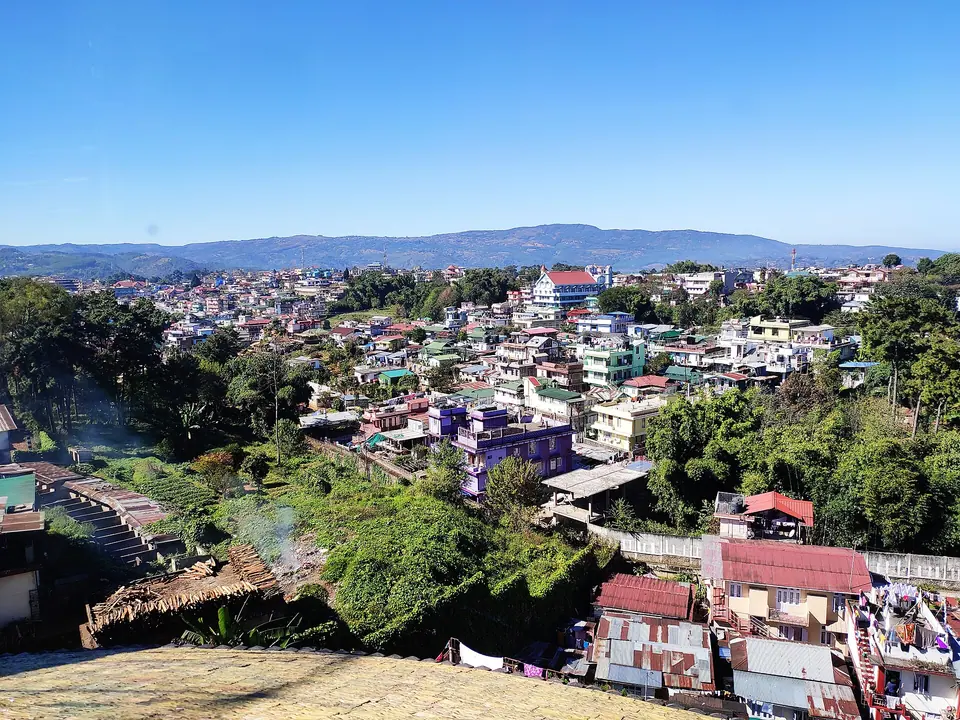
Mawlynnong is a Khasi village in East Khasi Hills, close to the Bangladesh border. In 2003, the travel magazine Discover India called it the cleanest village in Asia, and in 2005 the cleanest in India. The title stuck, and it changed the village: tourism is now a real part of household income, alongside betel nut, pineapples and lychees.
Mawlynnong at a glance
| Detail | What to know |
|---|---|
| District | East Khasi Hills, Meghalaya |
| Distance from Shillong | About 90 km, 2.5–3 hours via Pynursla |
| Distance to Dawki | About an hour by road |
| Community | Khasi, largely Christian, matrilineal |
| Households | Around 95, according to a 2014 count |
| Day visitors | Monday to Saturday only, since January 2026 |
| Time needed | 2–3 hours, or one night |
| Fees | Small community fees, usually under ₹100, plus parking |
| Best months | October to April |
The Sunday rule
This is the most important thing to know before you plan. From January 2026, the village dorbar, or council, stopped admitting day visitors on Sundays. The reason is simple: Sunday is a church day, most residents spend much of it at services, and there is nobody to run the restaurants, stalls, toilets and car park.
What the rule means in practice:
- Day trips from Shillong or Dawki should be planned for Monday to Saturday.
- Restaurants, shops, stalls and public toilets close to day-trippers on Sundays.
- Guests staying overnight in a village homestay through Sunday, or checking in on Sunday night, are still welcome; their hosts look after them.
- Other villages in the region, such as Nongjrong, have adopted similar Sunday rules.
We have rebuilt our own itineraries around this. If a guest's only free day for Mawlynnong falls on a Sunday, we either switch it with Dawki or Sohra, or book a homestay so they arrive on Saturday and stay the night. Our Meghalaya travel rules guide covers this and the other rules introduced since 2025.
What makes the village different
The famous cleanliness is not a show for tourists. It is a set of habits that the community keeps and enforces.
- Bamboo dustbins stand along the lanes and outside houses. Waste goes from the bins to pits and is turned into manure.
- Plastic and smoking are discouraged or banned, and signs remind visitors.
- Lanes are swept daily, often by children as well as adults.
- Gardens and flowering plants line the paths, many tended by individual households.
- Rainwater harvesting is encouraged.
Khasi society is matrilineal, and in Mawlynnong, as across the Khasi Hills, property and family names pass through the mother's line, traditionally to the youngest daughter. The village has three churches, and a literacy rate of around 90% has been reported.
Things to do in Mawlynnong
Most visitors spend two to three hours here. You can do everything below at an easy pace in a morning.
| What | Details | Time |
|---|---|---|
| Village walk | Lanes, gardens, houses, bamboo dustbins and churches | 45–60 min |
| Bamboo viewing platform | Climb for a view towards the Bangladesh plains on clear days | 20–30 min |
| Balancing rock | A large boulder resting on a smaller stone, at the edge of the village | 10–15 min |
| Riwai living root bridge | Short walk down to a single root bridge over a stream | 45–60 min return |
| Lunch at a village eatery | Simple Khasi or Indian meals | 45 min |
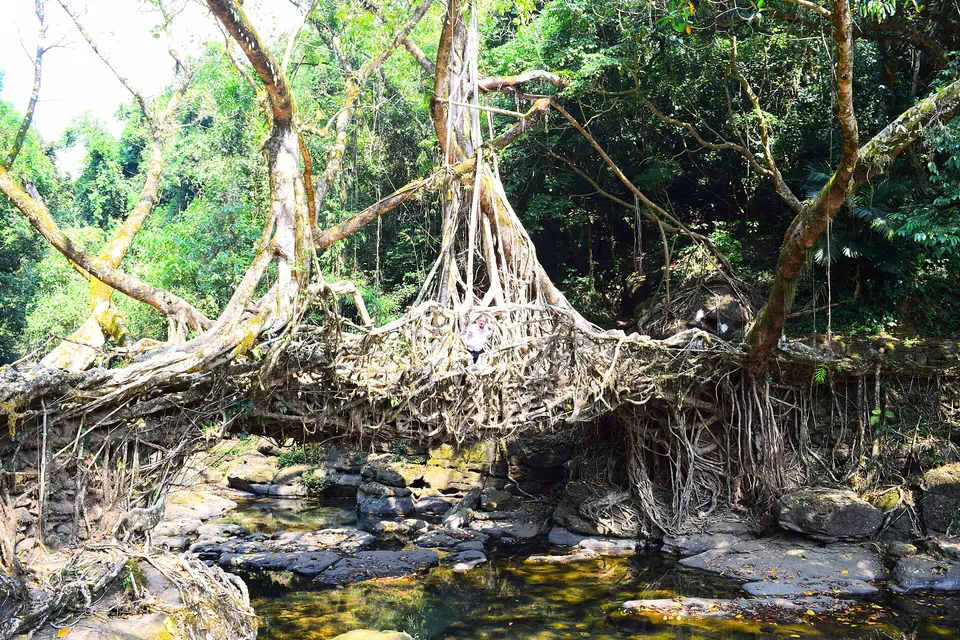
The Riwai root bridge is the best short root bridge walk in Meghalaya. It is a single living bridge made from the aerial roots of a rubber fig tree, trained across a stream over many years. The walk down is a few minutes of steps, and the stream below is pleasant for a rest. If you are not doing the long Nongriat trek from Sohra, this is a good way to see a root bridge up close. Our living root bridges explainer covers how they are grown.
The viewing platform is a tall bamboo structure among the trees. On a clear winter day, you look out over the forest towards the flat plains of Bangladesh. It is not for anyone with a fear of heights, and it can be closed in bad weather.
Getting there
Mawlynnong is about 90 km from Shillong. The drive runs south through Pynursla, with good views over the southern slopes of the Khasi Hills, and takes two and a half to three hours. The last stretch to the village is narrower.
- From Shillong: a private taxi with driver is the practical option. Self-drive rentals are not allowed in Meghalaya.
- From Dawki: about an hour by road.
- From Guwahati: about five hours; too long for a comfortable day trip.
Shared vehicles are rare on this route. If you are travelling on a budget, the cost of a Shillong taxi for a Mawlynnong and Dawki day is best split among four or five people.
Mawlynnong and Dawki in one day
The most popular plan combines the village with a boat ride on the Umngot River at Dawki. It is a long day, but it works.
| Time | Plan |
|---|---|
| 7:30 am | Leave Shillong |
| 10:15 am | Arrive Mawlynnong; village walk |
| 11:30 am | Riwai root bridge |
| 12:30 pm | Lunch in the village |
| 1:30 pm | Drive to Dawki |
| 2:30 pm | Umngot boat ride |
| 4:00 pm | Start back to Shillong |
| 7:00 pm | Arrive Shillong |
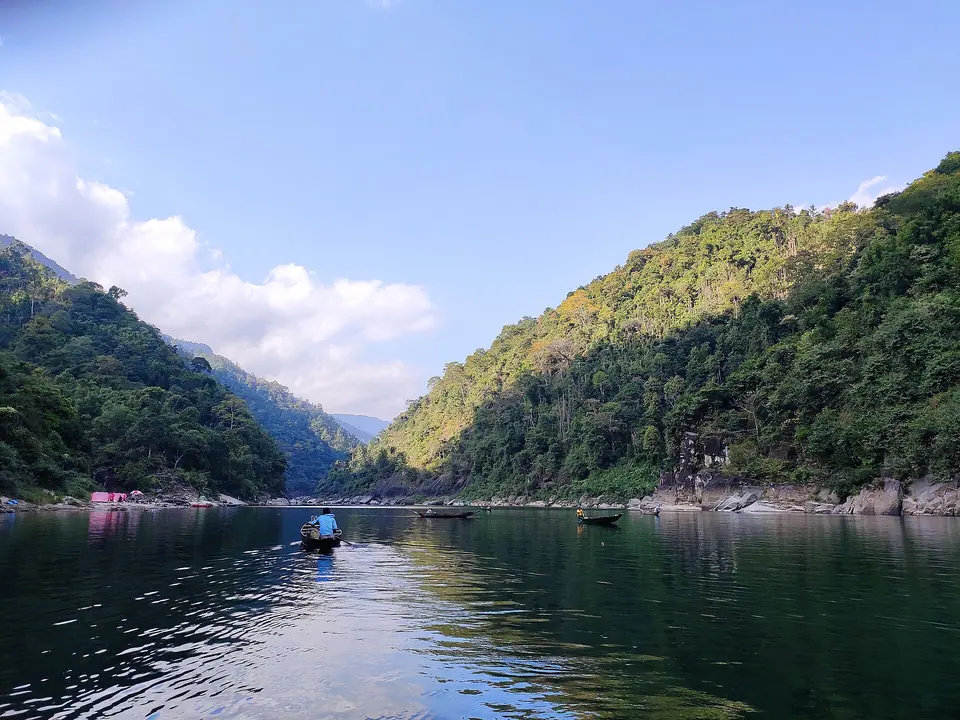
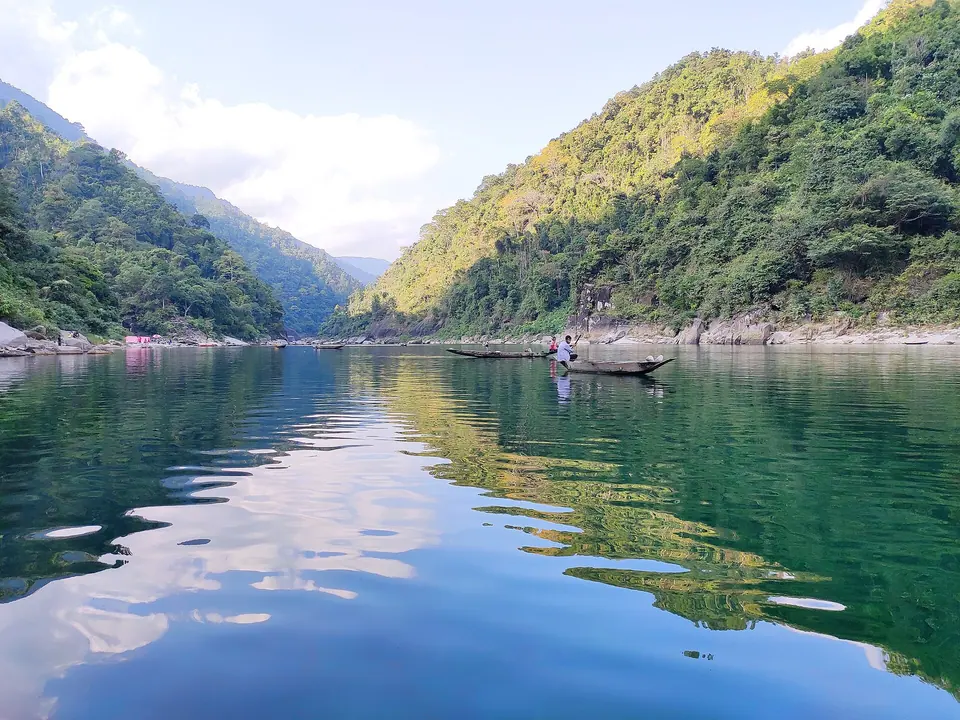
The Umngot is clearest from November to March, when the boats appear to float on glass. In the monsoon, the river runs muddy and boating is often stopped. For more on Dawki and the camping village of Shnongpdeng, see our Dawki and Umngot River guide.
Staying overnight
A night in Mawlynnong is the best way to see it. Day visitors thin out by late afternoon, and early morning, when residents sweep the lanes and mist sits over the forest, is the village at its most itself.
- Homestays and small guesthouses are run by local families. Rooms are simple and clean, some with shared bathrooms.
- Meals are usually home-cooked Khasi food, with plain options for anyone who asks.
- Your host must register you on the Meghalaya tourism app, so carry photo ID for every traveller.
- Book ahead for weekends, Puja holidays and October–November.
- Staying Saturday night is the one way to be in the village on a Sunday; respect the quiet and church hours.
Best time to visit
- October to November: dry lanes, green gardens after the monsoon, and clear days. Our first choice.
- December to February: cool and dry, with the clearest views from the viewing platform and the Umngot at its most transparent.
- March to May: warmer, with the first storms from April; still good for a day trip.
- June to September: heavy rain, slippery steps and muddy rivers. The village is lush, but Dawki boating often stops.
How to be a good visitor
Mawlynnong is a home first and a sight second. The village has asked visitors to follow a few simple rules, and we pass them on to every guest:
- Put all litter in the bamboo bins, or carry it out.
- Do not smoke, and avoid plastic bags and bottles.
- Stay on the lanes; the gardens belong to households.
- Ask before photographing people or entering compounds.
- Keep your voice down near churches and houses, especially on Saturdays and Sundays.
- Pay the community fees; they fund the upkeep you are enjoying.
Food in and around the village
Mawlynnong has a handful of small eateries run by village families, and lunch here is part of the visit. Expect rice with dal, vegetables, eggs and chicken, with Khasi dishes on many days: jadoh, rice cooked with meat; pork with local herbs; and a sharp chutney on the side. Vegetarian meals are available if you ask. Portions are generous and prices are modest.
On busy weekdays, the eateries fill between 12:30 and 2 pm. Ordering when you arrive and eating after your walk saves waiting. Carry water, and keep your plastic bottle with you until you find a bin, or better, bring a refillable one. Remember that on Sundays, the eateries do not serve day visitors.
Mawlynnong with children or older parents
The village is one of the easiest outings in Meghalaya for families. The lanes are flat or gently sloping, well kept and free of traffic, and children enjoy the bamboo bins, the gardens and the balancing rock. The viewing platform is best left to confident climbers; younger children should be held throughout.
The Riwai root bridge involves steps down and back up. Most older travellers manage it slowly, but anyone with knee trouble can enjoy the village and skip the bridge. The biggest effort for families is the drive: five to six hours of road in a day with Dawki. If you are travelling with small children or older parents, we suggest a night nearby instead of a same-day return to Shillong.
Photography tips
- Arrive before 10 am for empty lanes and soft light through the trees.
- Ask before photographing people, especially inside compounds and near churches.
- A wide lens works best in the narrow lanes; a short zoom helps from the viewing platform.
- In the monsoon, keep a dry bag for your camera; showers arrive quickly.
- Drones are not welcome over homes; ask the village authorities before flying anything.
Mistakes we see
- Planning a Sunday day trip. Since January 2026, you will be turned away.
- Arriving at noon on a long weekend. Parking and lanes are at their most crowded.
- Treating the village as a photo backdrop. People live here; keep to the lanes and keep noise down.
- Skipping Riwai. The root bridge is a short walk and one of the best parts of the visit.
Is it worth the drive?
Some travellers arrive expecting something grander, and are surprised at how small and ordinary the village is. That is the point. What Mawlynnong shows is what a community can do with shared rules and daily effort. If you care about that, the drive is worth it. If you only want scenery, you may prefer to spend the time at Sohra or the Umngot. Combining Mawlynnong with the Riwai root bridge and Dawki gives you both.
How we'd plan it
We almost never send guests to Mawlynnong on its own. It fits best as one stop on a four- to six-night Meghalaya trip, on a weekday, combined with Dawki.
For a short break, the three-night Umngot River and Mawlynnong trip spends a night in Mawlynnong and one at Shnongpdeng, from ₹13,500 per person on twin sharing. The four-night Shillong, Cherrapunji, Dawki and Mawlynnong tour includes a night in the village, from ₹16,500. Families can look at the Meghalaya Family Holiday, which also stays a night in Mawlynnong, from ₹19,500, while photographers can use the Meghalaya Photography Tour for early light in the village. For a longer trip, the Complete Meghalaya tour ends with a night in Mawlynnong so you can see the lanes before the day visitors arrive, from ₹23,500. Our Meghalaya 5-day itinerary shows how it slots in.
Want a weekday plan with Mawlynnong and Dawki for your dates? Ask the travel desk through our contact page.