
Meghalaya Itinerary 7 Days: Khasi and Jaintia Hills Loop
Meghalaya itinerary for 7 days: Shillong, Laitlum, 2 nights in Sohra and Nongriat, Mawlynnong, Dawki, Krang Suri and Jowai, with drive times and stays.
Shillong Trip Travel Desk · Updated · 9 min read
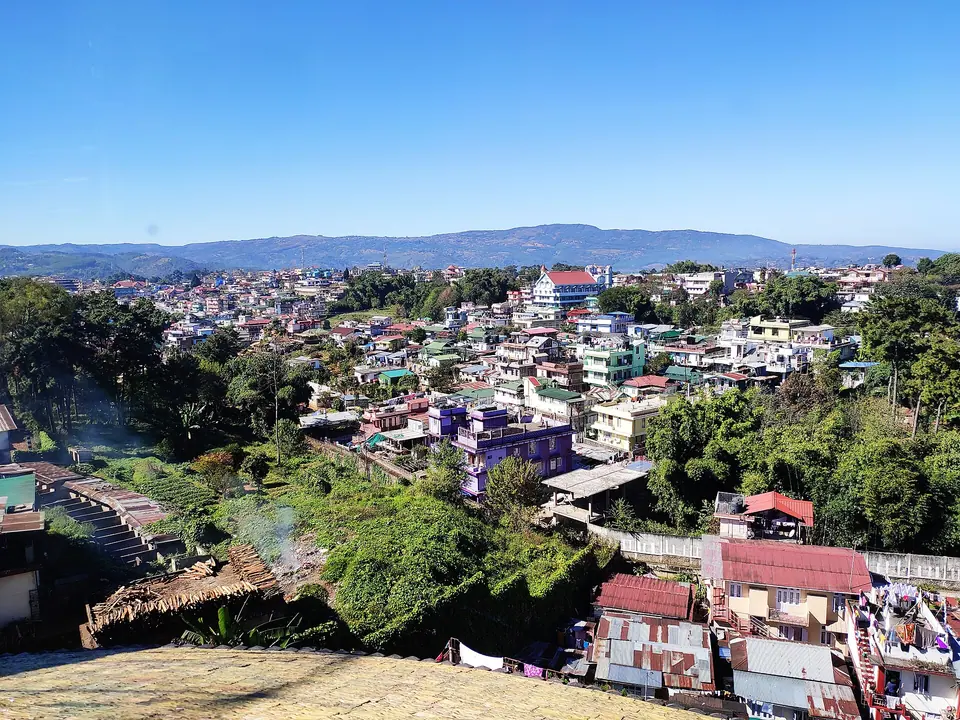 ANKAN · Commons · CC BY-SA 4.0
Our Meghalaya itinerary for 7 days loops through both the Khasi and Jaintia Hills: 2 nights in Shillong for Laitlum and Mawphlang, 1 in Sohra, 1 at Nongriat below the root bridges, 1 in Mawlynnong, 1 in Jowai after Dawki and Krang Suri Falls, then the Nartiang monoliths on the way back to Guwahati.
Key takeaways
- Seven days lets you sleep at Nongriat, the only way to see the double decker root bridge without a same-day 7,000-step round trip
- Adding Jowai turns the trip into a loop, so you never drive the same road twice after Shillong
- Krang Suri Falls is roughly 1.5 hours from Dawki via Amlarem and is best from November to May
- The longest drive is the last day: about 185 km and 5.5 hours from the Nartiang area to Guwahati airport
- Five different beds in seven nights sounds tiring, but no single transfer is longer than 3 hours before day 7
- In the monsoon, swap Nongriat for a second Sohra night and check whether Krang Suri swimming is open
On this page 14 sections
- The loop at a glance
- Day 1: Guwahati to Shillong
- Day 2: Laitlum, Mawphlang and the city
- Day 3: Shillong to Sohra
- Day 4: Down to Nongriat
- Day 5: Climb out, drive to Mawlynnong
- Day 6: Dawki, Shnongpdeng and Krang Suri to Jowai
- Day 7: Nartiang and back to Guwahati
- Distances and drive times
- Who this loop suits, and who it doesn't
- Booking notes for peak season
- Money and food on the loop
- Variations
- How we'd plan it
- FAQs
A week is the point at which you can stop choosing between Meghalaya's famous stops and start seeing them properly: the root bridges with a night in the village below, Dawki's river at first light, and the Jaintia Hills that most tours skip. This is the 7-day loop we would do ourselves, built so that after Shillong you never drive the same road twice.
It suits active couples, friends and families with older children. If anyone in your group can't manage about 3,500 steps each way, read the variations first, since the Nongriat night is the heart of the plan.
The loop at a glance
| Day | Route | Drive | Key stops | Sleep | Altitude |
|---|---|---|---|---|---|
| 1 | Guwahati to Shillong | 120 km, 3 to 3.5 hrs | Umiam Lake, Ward's Lake | Shillong | 1,525 m |
| 2 | Shillong local | About 70 km, 3 hrs | Laitlum, Mawphlang, Shillong Peak | Shillong | 1,525 m |
| 3 | Shillong to Sohra | 55 km plus local | Mawkdok, Nohkalikai, Mawsmai Cave | Sohra | About 1,450 m |
| 4 | Tyrna to Nongriat on foot | 12 km drive, 1.5 to 2 hrs walk | Double decker bridge, Rainbow Falls | Nongriat | About 700 m |
| 5 | Nongriat to Mawlynnong | Climb 2 to 3 hrs, then 90 km, 3 hrs | Riwai root bridge, Sky View | Mawlynnong | About 500 m |
| 6 | Mawlynnong to Jowai | About 130 km, 4.5 hrs with stops | Dawki, Krang Suri Falls | Jowai | About 1,380 m |
| 7 | Jowai to Guwahati | About 185 km, 5.5 hrs | Nartiang monoliths | Home |
Altitudes are approximate. The trip is low-risk for altitude; the change you'll notice is temperature, from cool Shillong evenings to warm, humid afternoons at Dawki.
Day 1: Guwahati to Shillong
Land at Guwahati by late morning and drive about 120 km to Shillong through Jorabat and Nongpoh. Stop for half an hour at Umiam Lake, 15 km before the city. Evening walk at Ward's Lake and Police Bazaar, early dinner.
- Drive: 120 km, 3 to 3.5 hrs
- Sleep: Shillong, 1,525 m
Day 2: Laitlum, Mawphlang and the city
6:00 am: Leave for Laitlum Canyons, about 25 km and 45 minutes to 1 hour. The valleys usually fill with cloud by 10 am, so early is the only way to see the drop to the villages below.
9:30 am: Breakfast back towards the city, then drive about 25 km west to Mawphlang Sacred Forest. Walks here are with a local Khasi guide from the entrance, take about an hour, and follow a rule the community enforces strictly: nothing leaves the forest, not even a fallen leaf.
2:00 pm: Shillong Peak (1,965 m, inside an Air Force area; carry original ID and check current status before you travel), then Elephant Falls, 12 km from the city.
5:00 pm: Don Bosco Museum in Mawlai is open until late afternoon; check the day's hours. Otherwise, cafes in Laitumkhrah.
- Drive: about 70 km in total
- Sleep: Shillong
Day 3: Shillong to Sohra
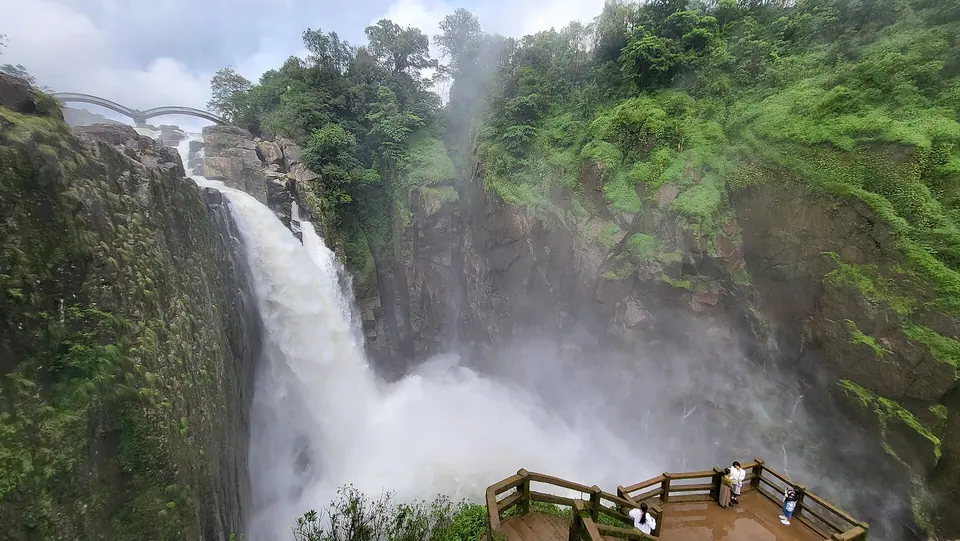
Check out at 8 am. Stop at the Mawkdok Dympep valley viewpoint 45 minutes out. In Sohra, do Nohkalikai Falls first (a 340 m plunge, the tallest in India), then Mawsmai Cave and the Seven Sisters Falls viewpoint, and Arwah Cave or the Thangkharang Park viewpoint after lunch. Sleep early.
Leave anything you won't need for two days in the car or at the Sohra hotel. Tomorrow you carry your own bag down 3,500 steps.
- Drive: about 55 km plus 30 km local
- Sleep: Sohra, about 1,450 m
Day 4: Down to Nongriat
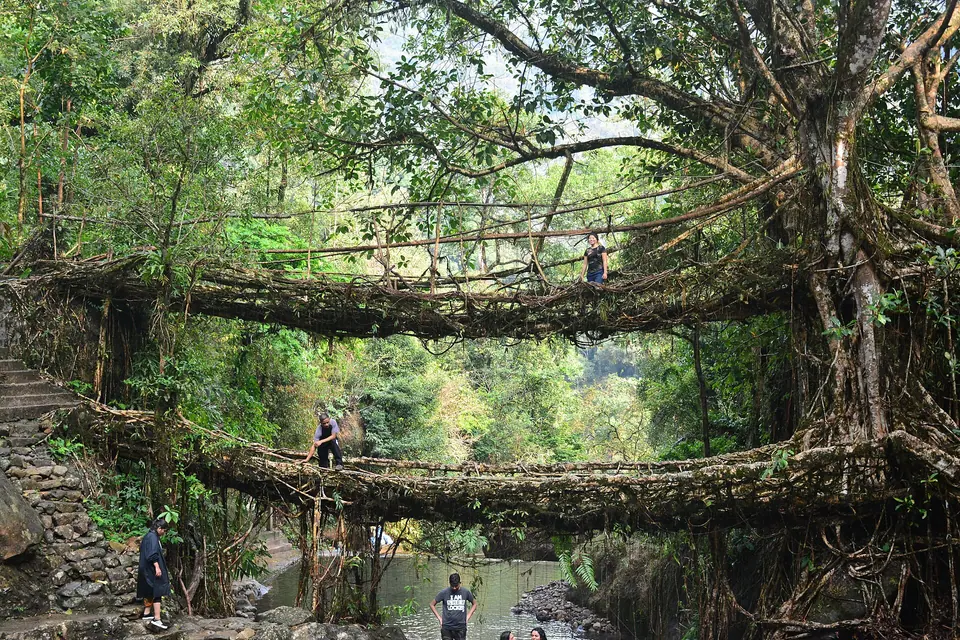
Drive 20 to 30 minutes to Tyrna village and start walking by 8 am. The path to the Nongriat double decker root bridge is concrete steps all the way, with two steel suspension bridges over the river and single root bridges on side paths. Going down takes 1.5 to 2 hours.
Drop your bag at your guesthouse, then continue to Rainbow Falls, about 1 to 1.5 hours further on a rougher trail. Swim in the pools if the water is calm. In the late afternoon, the day-trippers climb out and the double decker bridge is yours.
Pack light: one change of clothes, a torch, a rain jacket, a quick-dry towel, cash for the guesthouse and snacks. Rooms are basic and some share bathrooms. Our root bridge trek guide lists what to expect.
- Walk: about 3,500 steps down, plus 2 to 3 hrs round trip to Rainbow Falls
- Sleep: Nongriat guesthouse, about 700 m
Day 5: Climb out, drive to Mawlynnong
Start the climb at 6:30 am, before the heat. Most people take 2 to 3 hours to reach Tyrna, where your driver waits. Change, eat and drive about 90 km, 3 hours, via Upper Shillong and Pynursla to Mawlynnong.
In the afternoon, walk the village lanes and the easy trail to the Riwai living root bridge, about 2 km from the village. The bamboo Sky View platform looks across the Bangladesh plains. Mawlynnong goes quiet after 5 pm, which is the reason to stay here and not in Shillong.
- Walk: about 3,500 steps up; drive 90 km, 3 hrs
- Sleep: Mawlynnong guesthouse, about 500 m
Day 6: Dawki, Shnongpdeng and Krang Suri to Jowai
7:00 am: Drive about 30 km, 1 hour, to Dawki and the Umngot River. The early boats catch the clearest water. Rides last 30 to 45 minutes.
9:30 am: Optional: continue about 10 km upstream to Shnongpdeng for a walk across the suspension bridge and snorkelling or kayaking in season.
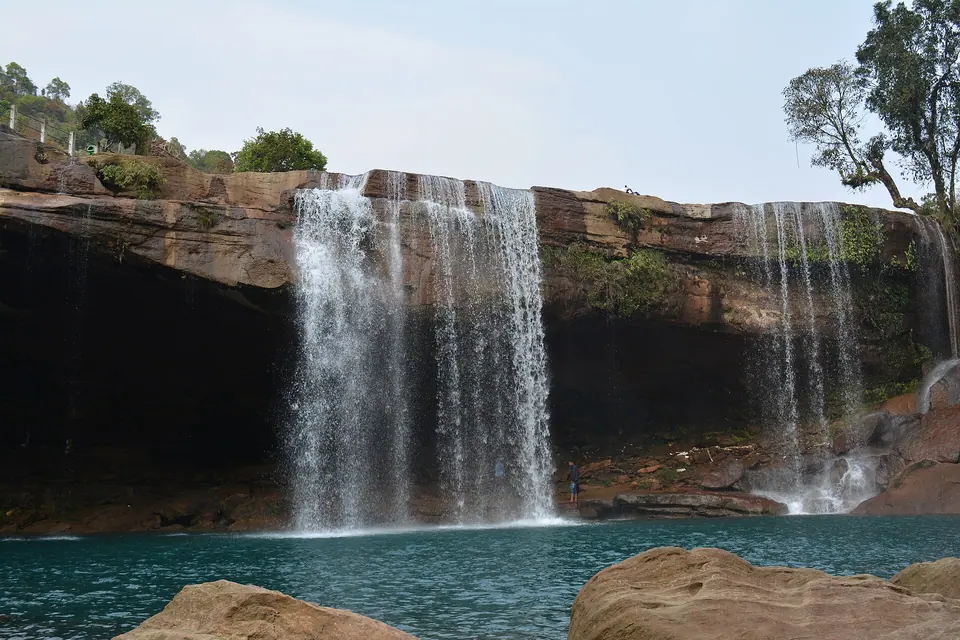
11:30 am: Drive into the Jaintia Hills via Amlarem, roughly 1.5 hours, to Krang Suri Falls. Its blue pool is best from November to May. Swimming is allowed with a hired life jacket when the forest and village authorities permit it.
3:00 pm: Drive about 1 hour to Jowai. If time allows, stop at Thadlaskein lake on the way into town.
- Drive: about 130 km, 4.5 hrs with stops
- Sleep: Jowai, about 1,380 m
Check current status before you travel for boating at Dawki and swimming at Krang Suri. Both close when water levels are high.
Day 7: Nartiang and back to Guwahati
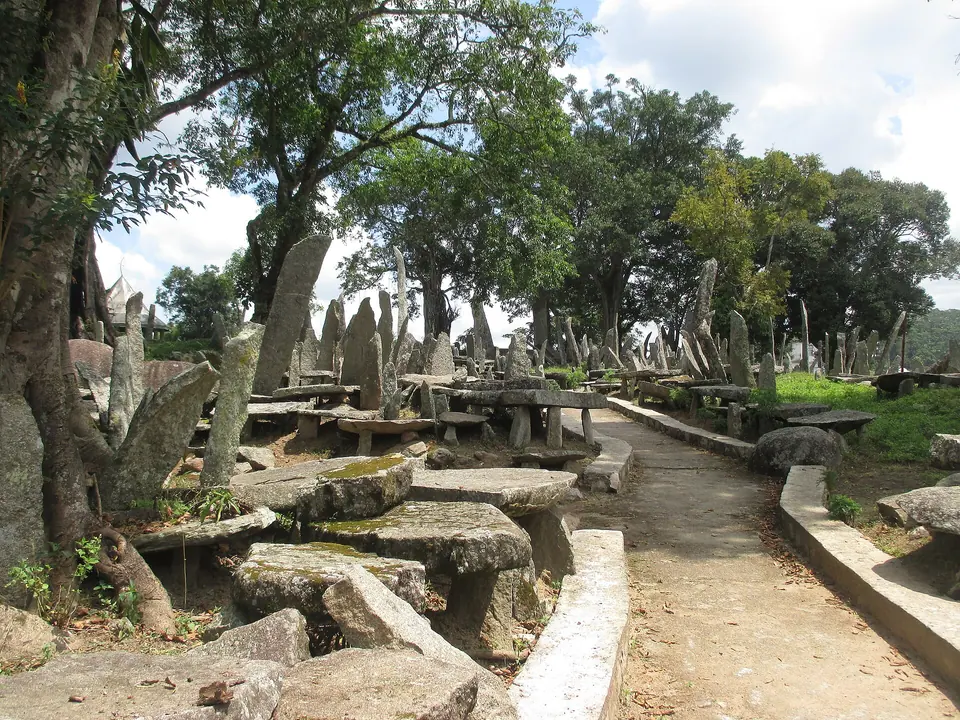
Leave Jowai at 7:30 am for the Nartiang monoliths, about 45 minutes away: one of the largest clusters of standing stones in the Khasi and Jaintia Hills, some over 8 m tall. Allow 45 minutes, plus 15 for the Durga temple nearby.
Leave by 9:30 am for Guwahati airport, about 185 km and 5.5 hours through Jowai road, Shillong's bypass and Jorabat. Book a flight after 4:30 pm, or stay the night in Guwahati.
- Drive: about 185 km, 5.5 hrs
- Home, or sleep in Guwahati
If your flight is early on day 8 rather than the evening of day 7, change the last night: sleep in Shillong or Guwahati instead of Jowai, see Nartiang on day 6 after Krang Suri, and keep the final morning free. It adds about an hour to day 6 but removes the pressure from the airport run, which we always prefer when a flight can't be missed.
Distances and drive times
| Leg | Distance | Typical time |
|---|---|---|
| Guwahati airport to Shillong | 120 km | 3 to 3.5 hrs |
| Shillong to Laitlum | 25 km | 45 min to 1 hr |
| Shillong to Mawphlang | 25 km | 45 min |
| Shillong to Sohra | 55 km | 1.5 to 2 hrs |
| Sohra to Tyrna | 12 km | 20 to 30 min |
| Sohra to Mawlynnong | 90 km | About 3 hrs |
| Mawlynnong to Dawki | 30 km | About 1 hr |
| Dawki to Krang Suri via Amlarem | About 45 km | About 1.5 hrs |
| Krang Suri to Jowai | About 30 km | About 1 hr |
| Jowai to Guwahati airport | About 185 km | 5.5 hrs |
Distances are rounded; add 30 to 60 minutes per leg in monsoon rain or weekend traffic.
Who this loop suits, and who it doesn't
It suits people who walk regularly, don't mind a basic room for one night, and would rather see fewer places properly than tick off twenty. It also suits second-time visitors who have done Shillong and Sohra on a short trip and want the Jaintia Hills.
It doesn't suit anyone with knee or heart problems (the Nongriat climb is about 3,500 steps up in one go, with few flat sections), travellers who want one hotel for the whole week, or groups larger than 8, who will struggle to find beds together in Nongriat and Mawlynnong. For those, the family version below works better.
Booking notes for peak season
From mid-October to early January and around Easter, the small stays on this route fill first. Nongriat guesthouses have only a handful of rooms each, and Mawlynnong's best homestays are booked weeks ahead for weekends. We confirm those two nights before anything else, then build the Shillong and Sohra hotels around them.
Jowai has fewer hotels than Shillong, most of them simple and clean rather than stylish. Book early and ask for a room away from the main road.
Hire one car and driver for all seven days, even though you leave it for the Nongriat night. A driver who has done this loop knows where Tyrna parking fills up, which Dawki ghat to use and the Amlarem road conditions after rain.
Money and food on the loop
Carry ₹3,000 to ₹4,000 per person in small notes for the week. Village entry fees, parking, the Nongriat guesthouse, boats and guides are mostly paid in cash, and UPI fails whenever the network drops in the gorges. Food is simplest at Nongriat (rice, dal, eggs, noodles) and best in Shillong and Jowai, where Jaintia pork dishes and local rice beer are on offer for those who want them.
Variations
Monsoon version (June to September)
Skip the Nongriat night and sleep a second night in Sohra instead. The steps are slick and streams rise fast after heavy rain. Do the double decker as a day walk only if the morning is dry. Dawki boating and Krang Suri swimming are often suspended, so we replace day 6 with a slower Jaintia route: Mawlynnong to Jowai via Shillong, with a stop at Thadlaskein lake. The falls at Sohra are at full flow, and our Monsoon Meghalaya package is built for exactly this season.
Family version
With children under 10 or older parents, drop the Nongriat night and Rainbow Falls, and see a root bridge at Riwai near Mawlynnong, which is a short walk. Stay 3 nights in Shillong and 2 in Sohra, then 1 in Jowai. Our Complete Meghalaya package takes this approach over 6 nights with Krang Suri included.
Adventure version
Swap Mawphlang for a cave day at Mawsmai and Arwah, and add a riverside camping night at Shnongpdeng with kayaking. Our Caves, Canyons and Camping package adds Nongkhnum River Island in the West Khasi Hills.
Foreigners version
No permit is needed for Meghalaya, but carry your passport through the Dawki border area and to every hotel check-in. Village guesthouses in Nongriat and Mawlynnong take cash only. If you plan to cross into Bangladesh at Dawki–Tamabil, you need a Bangladesh visa in advance and should check the crossing's current status before you travel.
How we'd plan it
For a fit couple travelling between October and March, we would book exactly this loop, adding one change: a second night at Nongriat if the forecast is dry, cutting the Shillong day. The Jaintia end is quieter and cheaper than the Khasi Hills, and Jowai makes a good last night before the airport run. For travellers who care most about the root bridges, our Living Root Bridges trek package is the tighter version; for photographers, our Meghalaya photography tour times each viewpoint for the light. If you have already done Sohra, the Jaintia Hills 4-night trip is a complete second visit.
Tight on time? Our Meghalaya in 5 days plan keeps the Sohra and Dawki core.
Send us your dates and how many steps your group can manage via our contact page, and we'll confirm the stays.