
Kaziranga 2 Days Itinerary: Safaris, Timings and Route
Kaziranga 2 days itinerary from Guwahati: afternoon jeep safari, dawn elephant ride, Western range jeep, which range when, timings, season and drive times.
Shillong Trip Travel Desk · Updated · 9 min read
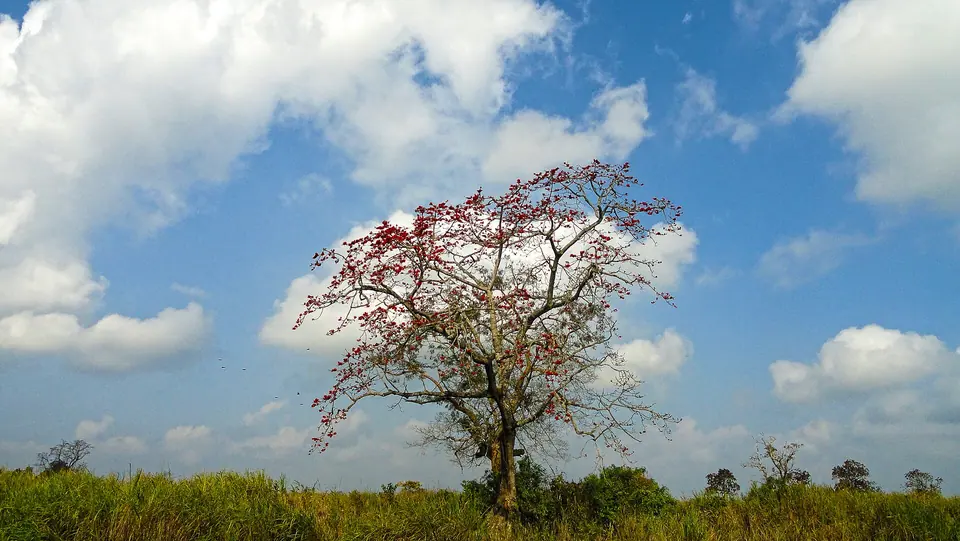 Anupom sarmah · Commons · CC BY-SA 4.0
For a Kaziranga 2 days itinerary, leave Guwahati by 6 am, reach Kohora (about 195 km) by 11 am and take an afternoon jeep safari in the Central range. On day 2, ride an elephant at dawn, take a morning jeep in the Western range at Bagori, then drive back to Guwahati. Safaris run roughly October to April.
Key takeaways
- Guwahati to Kohora is about 195 km and 4.5 to 5 hours on NH 27 and NH 715 via Nagaon
- Two days and one night gives you three safari sessions if you arrive by noon on day 1
- Use the Central (Kohora) range on day 1 and the Western (Bagori) range on day 2 for different habitat
- Jeep slots usually start around 7:30 am and 1:30 pm; elephant rides run in 1-hour batches from about 5:30 to 7:30 am
- Safaris run only in the dry season, roughly October to April; elephant rides usually restart in November
- Book a Guwahati flight after 6:30 pm on day 2, or stay a second night in Kaziranga
On this page 12 sections
- Two days at a glance
- Day 1: Guwahati to Kaziranga and the afternoon safari
- Day 2: Elephant at dawn, Western range, back to Guwahati
- The four safari ranges
- Timings, season and booking
- What you are likely to see
- Rules inside the park
- Getting there without a private car
- Numbers worth knowing
- Variations
- Where to go next
- How we'd plan it
- FAQs
Kaziranga rewards the traveller who arrives by noon. Get to Kohora before lunch and you can fit three safaris into two days: an afternoon jeep on day 1, a dawn elephant ride and a morning jeep on day 2. Arrive at 4 pm and you are down to one. This plan is built around that fact, and it is the one we run most weekends between November and April for guests starting from Guwahati.
It covers the drive, which range to use when, the safari timings, where to stay, and how to change it for families, photographers, foreign visitors and anyone arriving from Shillong.
Two days at a glance
| Time | Day 1 | Day 2 |
|---|---|---|
| Early morning | 6:00 am leave Guwahati | About 5:30 am elephant safari (Central or Western range) |
| Morning | Drive via Jorabat and Nagaon | About 8:00 am jeep safari, Western range (Bagori) |
| Midday | 11:00 am reach Kohora, check in, lunch | 11:30 am check out, lunch |
| Afternoon | 1:30 pm jeep safari, Central range (Kohora) | 12:30 pm drive to Guwahati |
| Evening | Orchid park or tea garden walk | 5:30 to 6 pm reach Guwahati |
| Sleep | Kaziranga (Kohora side) | Home, or Guwahati |
Drive each way: about 195 km, 4.5 to 5 hrs. This is our Kaziranga Safari Break with one night trimmed.
Day 1: Guwahati to Kaziranga and the afternoon safari
The drive
Leave Guwahati by 6 am. The route runs east through Jorabat, then on NH 27 to Nagaon and NH 715 to Kohora, the Central range gateway of Kaziranga National Park. It is about 195 km and 4.5 to 5 hours, with a breakfast stop around Nagaon. The last 40 km follow the park's southern edge; keep your eyes on the grassland to the left, where rhinos and wild buffalo often graze in sight of the highway.
For more on road, rail and bus options, see our guide on Guwahati to Kaziranga distance and timings.
11:00 am: Check in
Most resorts sit along NH 715 around Kohora or Bagori. For a single night, stay near Kohora, which is central to the Western and Eastern ranges. Ask for a room away from the highway. Our list of the best resorts in Kaziranga compares locations and budgets.
1:30 pm: Central range jeep safari
Your jeep collects you from the hotel or you meet at the Kohora gate. The Central range mixes tall elephant grass, beels (shallow wetlands) and patches of woodland, so you often see rhino, wild water buffalo, swamp deer, hog deer and elephant on one drive. Safaris last about 2 to 3 hours on set routes with watchtowers. Tigers are present but rarely seen.
Evening
Back by 4:30 pm. Walk through a tea estate near Kohora, or visit the Kaziranga Orchid and Biodiversity Park for its orchid collection and a short cultural performance. Eat early: tomorrow starts before 5 am.
- Drive: about 195 km, 4.5 to 5 hrs
- Sleep: Kaziranga, Kohora side
Day 2: Elephant at dawn, Western range, back to Guwahati
5:30 am: Elephant safari
Elephant rides run in the Central (Kohora) and Western (Bagori) ranges only, in 1-hour batches between about 5:30 and 7:30 am. The exact slot is usually allotted the evening before. At first light, with mist on the grass, the elephants go where jeeps can't, and rhinos often stand a few metres away. Some travellers prefer to skip elephant rides on welfare grounds; if so, sleep in and take only the jeep safari.
8:00 am: Western range jeep safari
After a quick breakfast, drive about 20 to 25 minutes west to Bagori for the Western range. Its open grassland and wetlands usually give the most rhino sightings of any range in our experience, and the light in the first two hours is soft enough for photography.
11:30 am: Check out and drive back
Leave by 12:30 pm after lunch and you reach Guwahati by 5:30 to 6 pm. Book a flight after 6:30 pm or stay the night in the city. If you have an hour to spare, Kamakhya Temple is on the city's western edge, but weekend queues can take 2 hours or more.
- Drive: about 195 km, 4.5 to 5 hrs
- Sleep: home, or Guwahati
The four safari ranges
| Range | Gate | Best for | Elephant rides |
|---|---|---|---|
| Central | Kohora | Mixed habitat, easiest access, good all-round sightings | Yes |
| Western | Bagori | Open grassland, usually the most rhino sightings | Yes |
| Eastern | Agaratoli | Wetlands, water birds, pelicans in winter | No |
| Burapahar | Ghorakati | Forested hills, primates and birds; fewer rhinos | No |
The Eastern range is about 40 minutes east of Kohora, and Burapahar is the farthest west. On a two-day plan, stick to Central and Western. Our Kaziranga safari guide covers booking, jeep sharing and rules in each range.
Timings, season and booking
Season. Kaziranga opens for safaris in phases, usually from October. In 2025, a limited circuit in the Western range at Bagori reopened on 26 September, the Central range at Kohora followed in the second week of October, and elephant safaris resumed on 1 November. For 2026–27, the forest department said in late September that it expected to reopen in October, with road repairs slowed by standing water. The park closes to safaris for the monsoon from about May, when the Brahmaputra floods much of the grassland. For the full month-by-month view, read the best time to visit Kaziranga.
Slots. Jeep safaris run a morning slot from around 7:30 am and an afternoon slot from around 1:30 pm, each usually about 2 hours on the track. Elephant rides run in 1-hour batches from about 5:30 to 7:30 am. There is no night safari. The forest department fixes the exact timings each season, so check current status before you travel.
Cost. Park entry is ₹100 per Indian adult and ₹650 per foreign adult, plus a small service charge. A still camera costs ₹100 for Indians and ₹200 for foreigners; mobile phones are free. Jeeps are paid per vehicle, for up to 6 people, and rates quoted by different sources vary widely; budget from about ₹3,500 per jeep for Indians and considerably more for foreign nationals. Elephant rides are paid per seat, roughly ₹1,200 to ₹2,000 for Indians. Treat all of these as indicative and confirm when you book.
Booking. Jeeps are arranged through the range office queue, your lodge or an operator, and elephant seats are limited. From mid-November to February, and especially over Christmas and New Year, both sell out. We reserve safaris at the same time as the hotel.
What you are likely to see
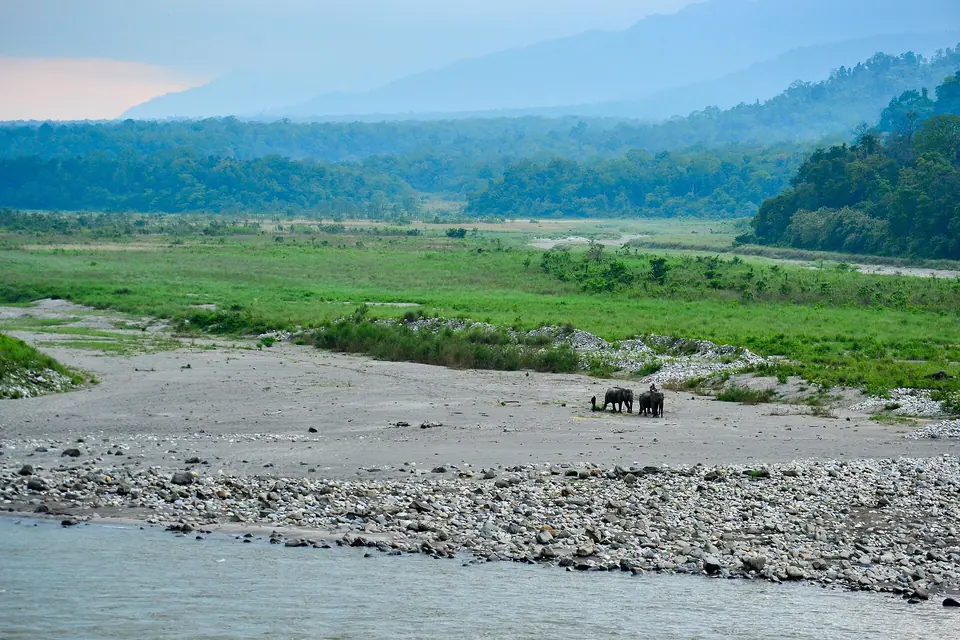
Rhinos are close to certain on a two-day plan with two ranges. Wild water buffalo, swamp deer (barasingha), hog deer, wild boar and herds of elephant are common sightings too. Tigers live here in good numbers but hide in the tall grass, so treat one as a bonus rather than a goal. From November to February, the wetlands hold migratory ducks, bar-headed geese and pelicans, and raptors such as Pallas's fish eagle nest along the beels. Morning fog in December and January can hang until 9 am, which is lovely for photographs and hard for spotting, so the afternoon jeep often gives better sightings in midwinter.
Rules inside the park
- Stay in the jeep except at the designated watchtowers.
- A forest guard rides along; follow his instructions.
- Keep voices low and don't play music.
- No drones, no feeding animals and no single-use plastic left behind.
- Carry the ID you booked with; it is checked at the gate.
Getting there without a private car
A private car is the easiest way to do this plan, because the safari gates are spread along 40 km of highway. Without one, state and private buses on the Guwahati–Jorhat and Guwahati–Dibrugarh routes stop at Kohora in about 5 hours, and resorts can arrange the jeep pick-ups once you arrive. The return bus is less predictable, so book it a day ahead through your hotel. Travellers flying in can also use Jorhat airport, about 95 km and 2 hours east of Kohora.
Numbers worth knowing
Kaziranga is a UNESCO World Heritage Site, inscribed in 1985, and home to the largest population of the greater one-horned rhinoceros. The 2022 rhino census by the park authorities counted 2,613 rhinos. The park lies on the south bank of the Brahmaputra, between the river and the Karbi Anglong hills, at under 100 m above sea level.
Variations
One night versus two
| Plan | Safari sessions | Best for |
|---|---|---|
| 2 days, 1 night (above) | 3 (jeep, elephant, jeep) | Weekend trips, first visits |
| 3 days, 2 nights | 4 to 5, including the Eastern range | Photographers, birders, families wanting a slower pace |
With two nights, the plan becomes our Kaziranga Safari Break. Adding Guwahati sights at either end turns it into our Guwahati and Kaziranga 3-night trip.
Family version
Children love the jeep safaris, but the 5 am elephant start is hard on small ones. With children under 6, we skip the elephant ride and take the morning jeep instead. Break the drive at Nagaon both ways. Carry snacks, since there's little to buy inside the park.
Photographer and birder version
Add a second night and an afternoon in the Eastern range at Agaratoli, where the wetlands draw pelicans, storks and migratory ducks in winter. Early morning in the Western range gives the best light for rhino portraits. Our Kaziranga and Nameri birding tour pairs Kaziranga with the forest birds of Nameri near Tezpur.
Foreigners version
No permit is needed for Assam, but carry your passport for hotel registration and the safari booking. Entry fees and elephant ride prices are higher for foreign nationals. Everything else in the plan stays the same.
Coming from Shillong
Shillong to Kaziranga is about 250 km and 6 to 7 hours via Jorabat, which means arriving too late for a day-1 safari. Add a night: arrive in the evening, safari twice the next day, then leave the following morning. Our Shillong, Cherrapunji and Kaziranga route is built this way.
Monsoon version
From roughly May to September, Kaziranga's safaris are closed. Pobitora, about 50 km from Guwahati, has one-horned rhinos in a much smaller area, but it also closes in the monsoon. In these months we suggest Meghalaya instead.
Where to go next
Kaziranga sits in the middle of Assam, which makes it an easy hinge for a longer trip.
- East to Majuli. Jorhat is about 95 km and 2 hours from Kohora, and the ferry from Neamati Ghat takes you to Majuli, the river island of Vaishnavite satras. Two nights there fit neatly after Kaziranga.
- North to Arunachal. Tezpur is about 2 hours away across the Brahmaputra, and from there the Tawang road climbs through Bhalukpong. Our Tawang itinerary explains the permits and altitude.
- Back west to Guwahati. Spend a night in Guwahati for Kamakhya and a Brahmaputra evening cruise before your flight.
- South to Meghalaya. Shillong is about 250 km and 6 to 7 hours away, the natural pairing for a first Northeast trip.
How we'd plan it
For a couple or a small family starting in Guwahati between mid-November and March, we would book this exact plan with a Kohora hotel, pre-booked safaris in both ranges and a flight after 7 pm on day 2. If the budget allows, we'd add the second night every time: the extra Eastern range afternoon is often the best drive of the trip. For a full Assam wildlife week with Manas and Pobitora, see our Kaziranga, Manas and Pobitora tour.
Send your dates and group size through our contact page, and we'll check safari availability for your weekend.