Assam
Kaziranga, Manas and Pobitora
- Guwahati
- Manas National Park
- Pobitora Wildlife Sanctuary
- Kaziranga National Park


Highest point on this trip: 150 m
This 3 nights / 4 days wildlife break stays close to Guwahati: two nights at Manas National Park on the Bhutan border with three jeep safaris, then a night in Guwahati and a dawn rhino safari at Pobitora before an afternoon flight. It suits long weekends. From ₹16,500 per person, twin sharing, November to April.
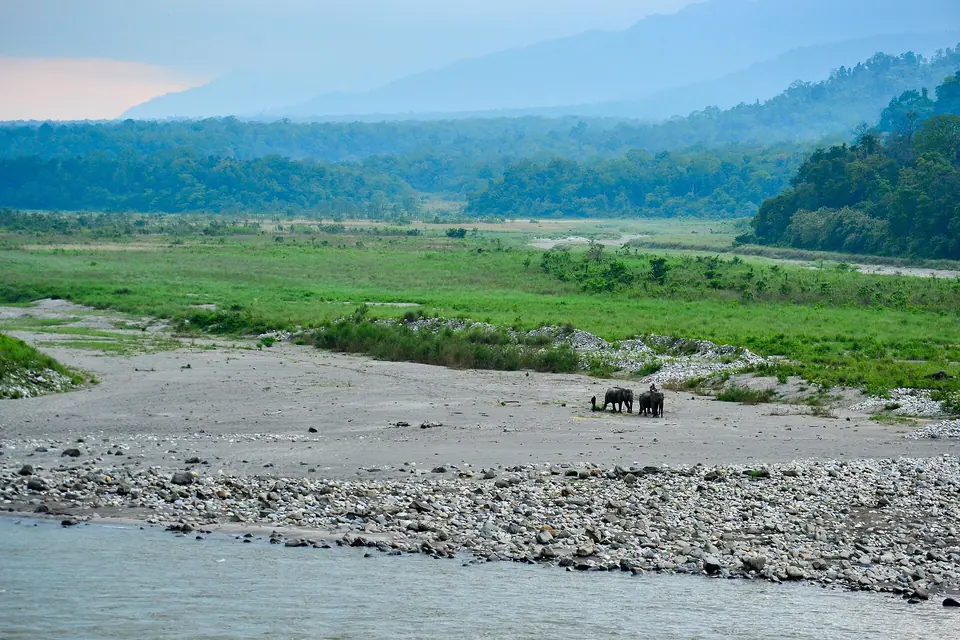
If you have four days and want wildlife without the drive to Kaziranga, this is the trip. Manas is about 140 km from Guwahati and Pobitora about 50 km, so no single drive exceeds four hours. Manas is a UNESCO World Heritage Site and tiger reserve where sal forest meets grassland under the Bhutan foothills. It is quieter than Kaziranga, with fewer vehicles and a wilder feel, and it holds golden langur, found only in this corner of Assam and Bhutan.
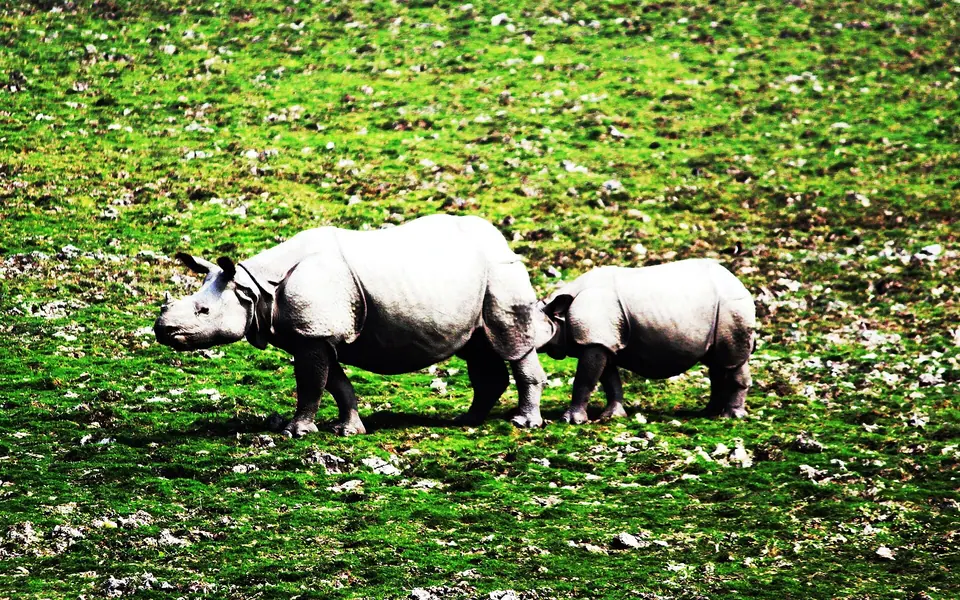
Pobitora is the opposite: a compact sanctuary of about 38 square kilometres with one of the densest one-horned rhino populations anywhere. A single early-morning safari there usually gives more rhino at closer range than many longer trips. We end at Pobitora on the last morning, and the airport is about two hours away, so you can still catch an afternoon flight.
Open to foreign passport holders with the right permits. Check permits
Route, permits and road status checked
Our driver meets you at Guwahati airport. We cross the Brahmaputra at Saraighat and drive north-west through Nalbari and Barpeta Road to Bansbari, where most Manas lodges sit near the range office. Try to land by 10 am so we can reach the lodge for a late lunch and the afternoon jeep safari, which usually runs from about 2 pm until dusk. The first drive is typically through the forest track towards the grassland, with good chances of wild elephant, gaur and hog deer. Dinner at the lodge and an early night.
The morning jeep leaves around 6.30 am and follows the main track about 20 km north to Mathanguri, where the Manas river emerges from Bhutan in a wide, clear channel. Golden langur are sometimes seen in the riverside trees, and great hornbills fly over the forest. Stop at the Mathanguri viewpoint before the return drive. Lunch and rest at the lodge. The afternoon safari explores grassland tracks where Bengal florican display in spring and swamp deer and wild buffalo graze. Evening walk in the fringe village with a local guide, if you wish.
An optional bird walk around the lodge at first light; the fringe forest is good for barbets, drongos, bulbuls and minivets. After breakfast we drive back to Guwahati, arriving by early afternoon. The rest of the day is yours. Many travellers visit Kamakhya Temple on Nilachal Hill and end at the Brahmaputra riverfront for sunset, or take a short evening cruise. We keep dinner early because the Pobitora safari next morning starts before sunrise. If you prefer, we can book a simple stay near Pobitora instead of Guwahati.
Leave Guwahati at 5.30 am for Pobitora. The first jeep safari of the day starts around 7 am and lasts about an hour and a half, crossing short grassland and wetlands where rhino, wild buffalo and water birds are often very close to the track. An elephant ride, where running, is another option. After breakfast at a local dhaba we drive to Guwahati airport, arriving by about 12.30 pm. Flights after 2 pm work comfortably. In January, the Jonbeel Mela barter fair near Jagiroad is worth a detour if the dates match.
Prices shown are for Standard. We confirm exact hotels when you book.
Manas: Birina Eco Camp; Guwahati: Hotel Kiranshree Portico, or similar
Manas: Musa Jungle Retreat; Guwahati: Radisson Blu Hotel Guwahati, or similar
Manas: Bansbari Lodge; Guwahati: Vivanta Guwahati, or similar
Yes. Two nights at Manas give you three jeep safaris, including the drive to Mathanguri on the Bhutan border, and one morning at Pobitora is enough for its small area. A fourth night would let you add the Bhuyanpara range of Manas or a relaxed day in Guwahati.
Pobitora is about 50 km east of Guwahati city in Morigaon district, roughly one and a half hours by road. From the sanctuary to Guwahati airport is about 70 km and two hours. That makes a dawn safari followed by an afternoon flight very practical.
Pobitora is known for Indian one-horned rhino, which are densely concentrated in its short grassland and wetlands. Wild buffalo, wild boar, hog deer and many water birds, including storks, egrets and ducks in winter, are also common. Leopards live in the surrounding hills but are rarely seen.
Manas is more forested and far less crowded. It sits on the Bhutan border, has the Manas river flowing out of the hills, and is home to golden langur and Bengal florican. Mammals are shyer, so sightings are fewer, but many visitors prefer its wilder atmosphere and quiet tracks.
Both parks are closed or largely inaccessible in the monsoon. Manas usually opens around October and Pobitora around November, and both close by May or June. November to April is the reliable window. Exact dates depend on flood damage, so check current status before you travel.
The indicative price starts at ₹16,500 per person, twin sharing, with standard stays, full board at Manas, four jeep safaris and a private car. Bansbari Lodge and luxury Guwahati hotels cost considerably more. Flights and elephant rides are not included. We send an exact quote once dates are confirmed.
Yes, but it needs more nights. Kaziranga is about 180 km beyond Pobitora, four hours further east. Our six-night Kaziranga, Manas and Pobitora tour adds three Kaziranga nights and five safaris. On a three-night budget, choosing Manas and Pobitora keeps drives short.
Yes. Drives are four hours at most, jeep safaris are short enough for children, and Manas lodges are comfortable and quiet. The dawn start at Pobitora is the only early morning. Children should wear subdued colours and stay seated in the jeep throughout.
Yes. The Bodoland region around Manas has been peaceful for years, and the park receives visitors, including foreigners, throughout the season. You travel with our driver and park-approved guides. As anywhere in the region, follow local advice and check current status before you travel.
Still wondering? Ask a trip planner
Change the pace, swap a place or add a safari. Tell us what to adjust and we’ll send a revised plan and price.
We use a few cookies
Essential storage keeps your saved trips and theme. With your OK we’d also use analytics to see which guides help people. No ads, no selling data. Cookie policy