
Hajo is a small town about 25 to 30 km north-west of Guwahati, across the Brahmaputra, sacred to three faiths. Hindus and Buddhists visit the Hayagriva Madhava temple, Muslims the 17th-century Poa Mecca shrine, and Shiva devotees Kedareswara. Pair it with the silk-weaving town of Sualkuchi for an easy half-day trip.
Hajo is one of those places where the history of the region is packed into a few hills. Its temples and shrines have drawn pilgrims for centuries, and unusually for India, three faiths treat it as holy ground. We go there for the mix, the quiet hilltop views over paddy fields and the pond full of turtles at the main temple.
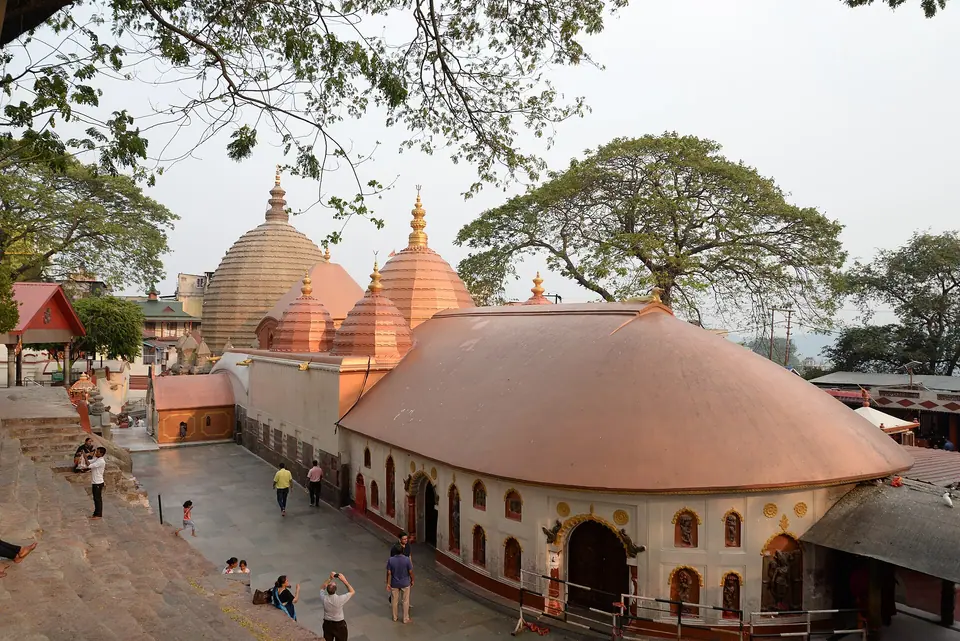
The Hayagriva Madhava temple on Monikut hill was rebuilt in 1583 by the Koch king Raghudeva Narayan, though local tradition takes its origins back much further. Hindus worship Vishnu here, and many Buddhists, especially from Bhutan and Tibetan communities, believe it is where the Buddha attained parinirvana. On Garurachal hill, Poa Mecca holds the tomb of Giyasuddin Aulia; tradition says a visit earns a quarter of the merit of a pilgrimage to Mecca.
On Madanachal hill, the Kedareswara Shiva temple has inscriptions from the Ahom period, and a Ganesh temple at its base has a large image carved from a single boulder. Twelve kilometres away, Sualkuchi is Assam's best-known silk-weaving town, where you can watch muga, pat and eri silk being woven on handlooms.
What makes it worth the trip
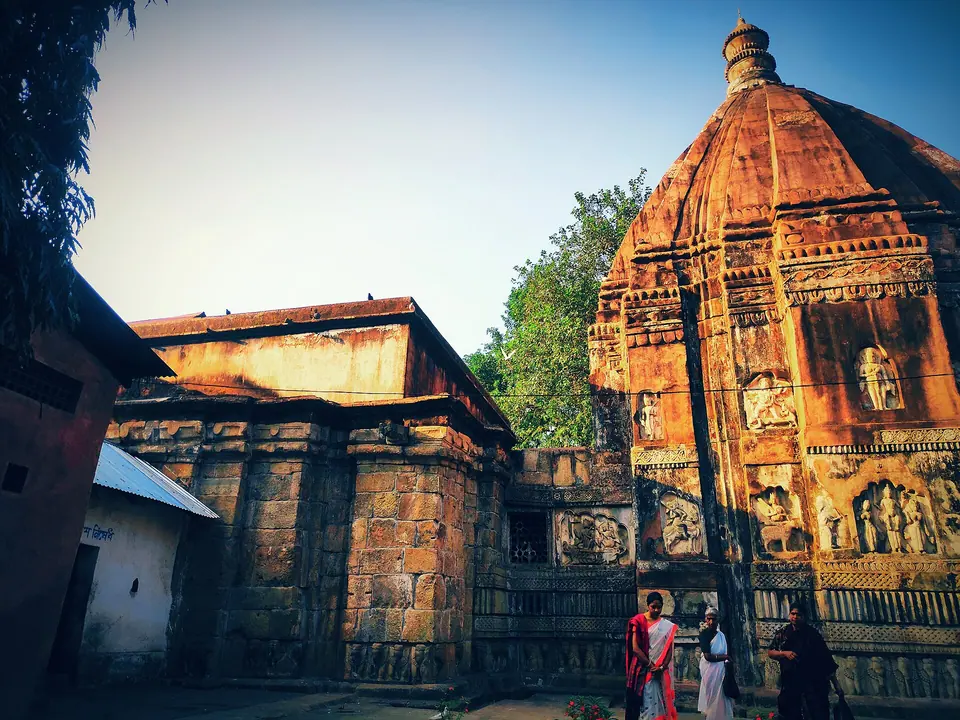
Hayagriva Madhava temple
A stone temple on Monikut hill, rebuilt in 1583, sacred to Hindus and Buddhists. The temple pond below has large, old turtles.
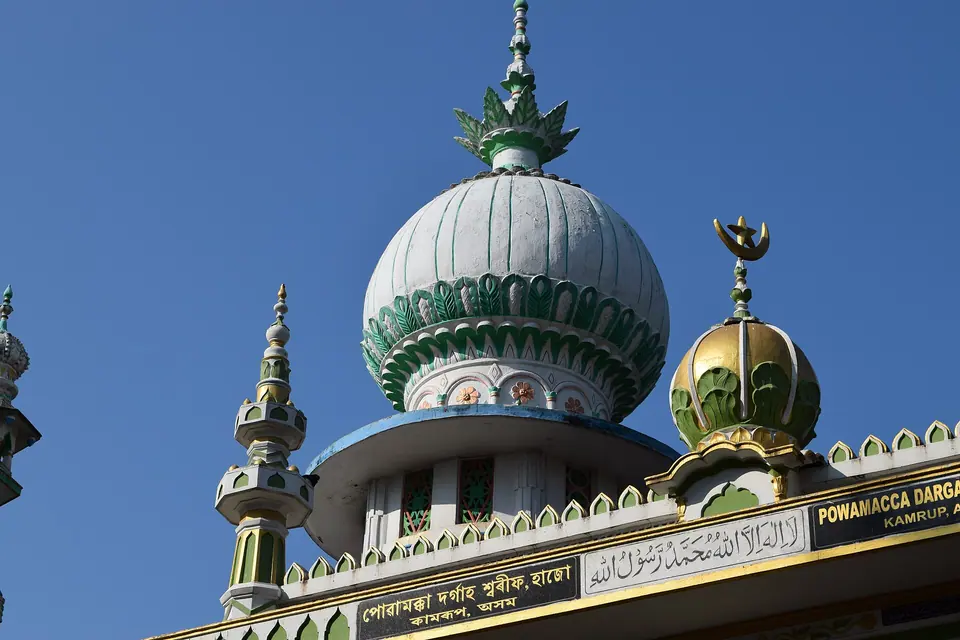
Poa Mecca
A 17th-century shrine on Garurachal hill with the tomb of Giyasuddin Aulia and an inscription dated 1657. Busy on Fridays.
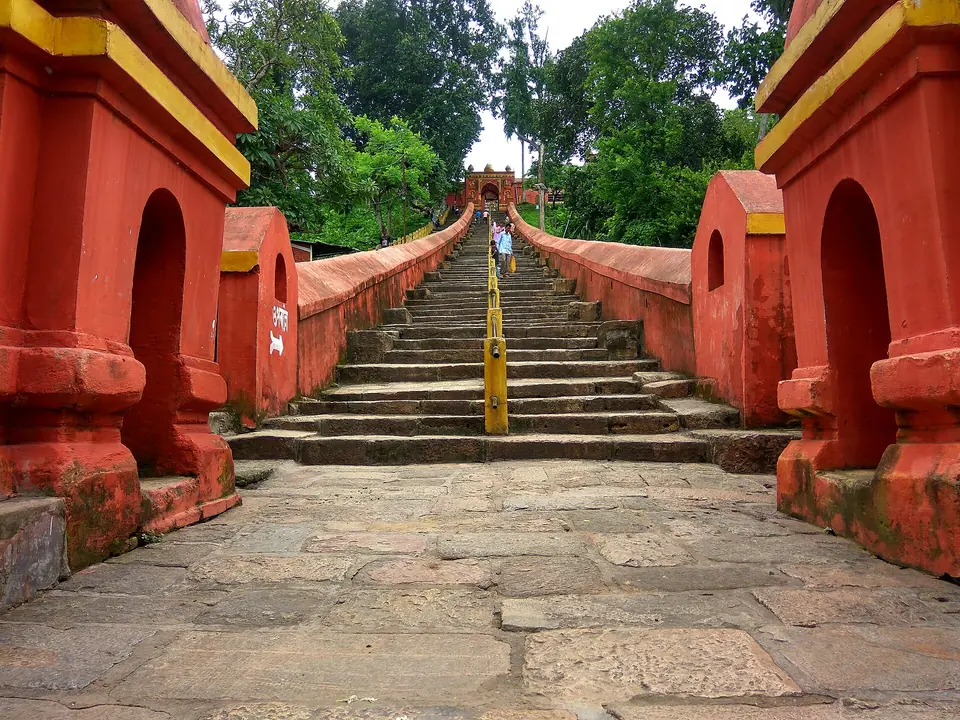
Kedareswara temple
A Shiva temple on Madanachal hill with Ahom-period inscriptions and a large lingam. Reached by a flight of steps.
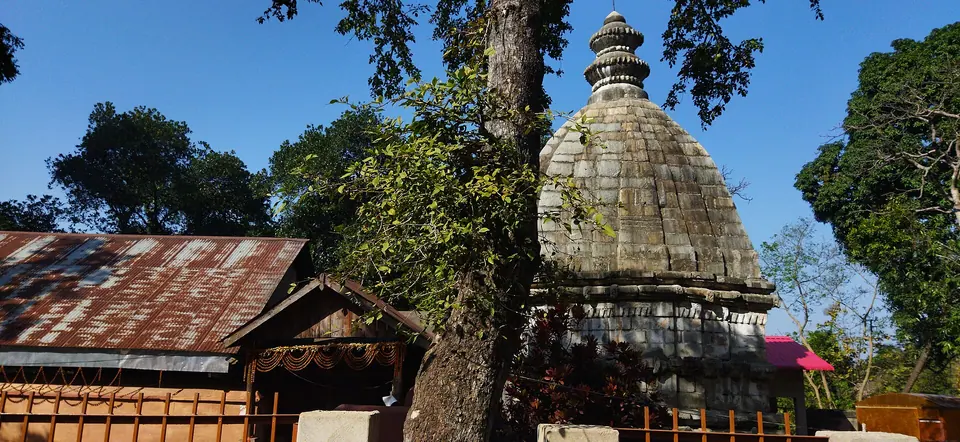
Ganesh temple
At the foot of Madanachal hill, with a Ganesh image carved from a single rock.
Sualkuchi silk village
About 12 km away, with thousands of handlooms weaving muga, pat and eri silk. Visit a weaving house and buy mekhela chador direct.
 PrabalJeetBhagawati · Commons · CC BY-SA 4.0
 Gaurav M Kumar · Commons · CC BY-SA 4.0
 Anindita Hazarika156 · Commons · CC BY-SA 4.0
 Deepankarbarpetiya · Commons · CC0
Things to do
- Climb to the Hayagriva Madhava temple and see the turtles in the pond
- Visit Poa Mecca on Garurachal hill and the view from its hilltop
- Climb the steps to Kedareswara temple on Madanachal hill
- See the rock-carved Ganesh image at the foot of Madanachal
- Watch silk being woven in Sualkuchi and buy mekhela chador or stoles
- Stop at the Madan Kamdev ruins if you have extra time, about 30 km further
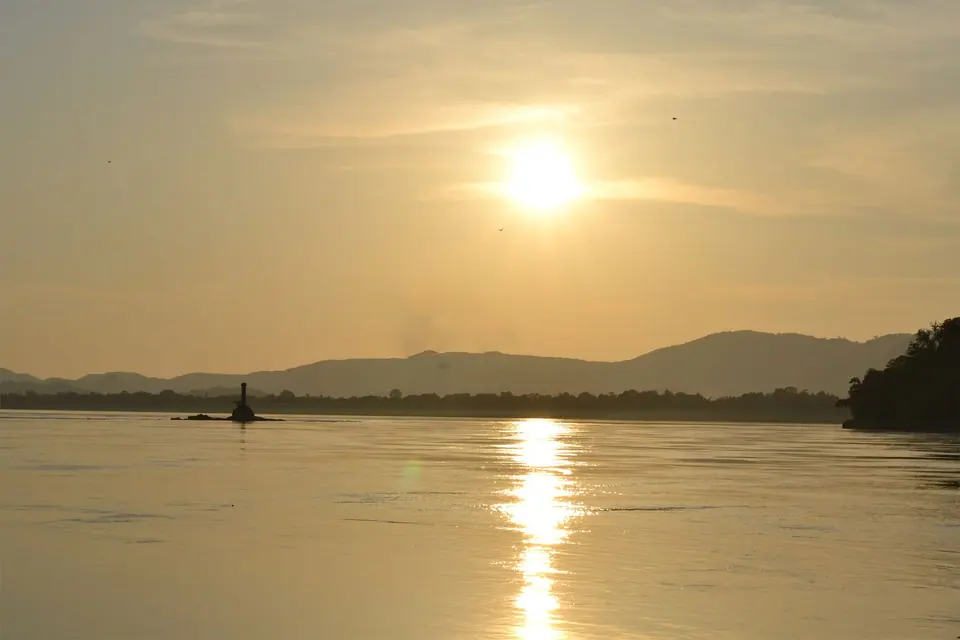
- Cross back to Guwahati for a sunset river cruise the same evening
Getting there
Hajo is about 25 to 30 km north-west of Guwahati city, depending on where you start, a drive of about an hour across the Saraighat bridge at Jalukbari and through North Guwahati. From Guwahati airport it is about 30 km. City and private buses run to Hajo from Adabari bus stand in Guwahati, but a hired car is easier for combining Hajo with Sualkuchi, 12 km away. Weekend traffic on the Saraighat bridge can add time.
Where to stay
Most travellers visit Hajo as a half-day trip and stay in Guwahati. Hotels in Jalukbari or Adabari on the western side of Guwahati, or on the airport side, are closest to the Saraighat bridge. Hajo itself has only a few basic lodges and guest houses near the temples, used mostly by pilgrims. North Guwahati has a small number of quieter hotels and resorts by the river, which also suit a visit to Sualkuchi.
Local tips
- Go in the morning, when the steps are cooler and the temples less crowded
- Dress modestly for all three faiths and carry a scarf to cover your head at Poa Mecca
- Remove shoes at temples and the shrine, and ask before photographing inside
- Sualkuchi weavers often close by late afternoon; visit before 4 pm
- Buy silk from established weaving houses and ask whether it is pure muga or pat
- Carry water; the hilltops have few shops
Rain and weather
Source: IMD 1991–2020 normals
October to March for cool mornings; the hilltop shrines have little shade in summer.